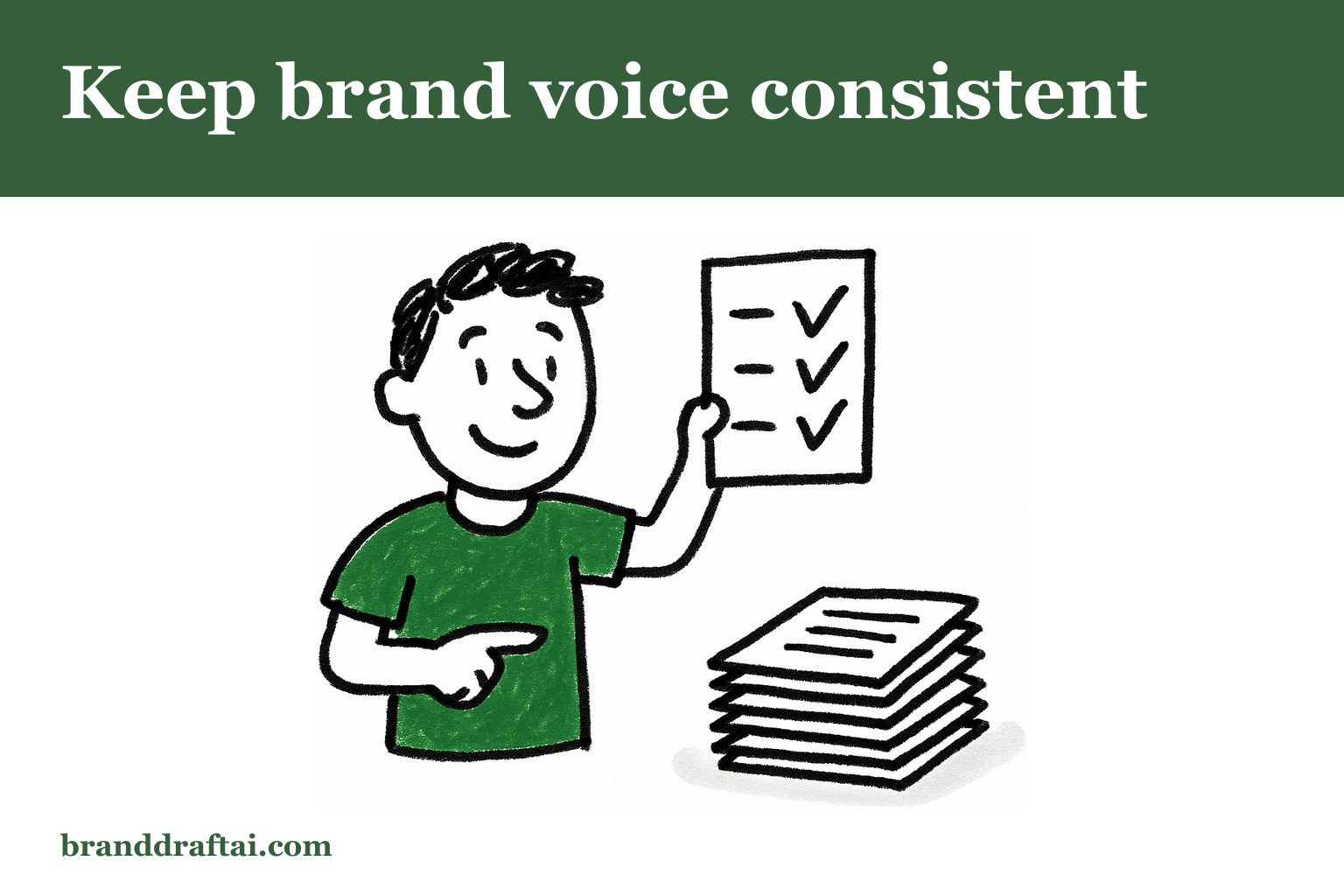

The quality control system content agencies use to keep brand voice consistent across writers
The brief came back with three rounds of revisions. "Doesn't sound like us." The writer had used "innovative solutions" twice and "streamlined processes" once. The client's actual product was a metal fabrication service that specialised in custom brackets for HVAC systems. They called them brackets, not solutions.
When you're managing content across multiple writers, this happens constantly. One freelancer captures the brand voice perfectly. Another makes the accounting software company sound like a tech startup. A third turns the local bakery into a "culinary experience destination."
The problem isn't the writers , it's the handoff. Most agencies send a style guide and hope for the best. But brand voice consistency across a team requires something more systematic than guidelines in a Google Doc.
Why the Standard Brand Brief Falls Apart
The typical content brief includes target keywords, word count, and maybe a few bullet points about "friendly but professional tone." Then you cross your fingers and wait for the draft.
Here's what actually happens: Writer A interprets "friendly but professional" as conversational and specific. Writer B thinks it means enthusiastic with exclamation points. Writer C plays it safe and produces something that could work for any business in the industry.
The client notices immediately. Not because they're picky, but because they know how their business actually sounds when it talks to customers. The disconnect is obvious.
What Works Instead of Just Style Guides
The agencies that maintain consistent voice across writers don't rely on descriptions of tone. They create examples of voice in action.
Voice banks work better than voice guides. Instead of "conversational but authoritative," show three paragraphs of actual conversational-but-authoritative writing from that specific brand. Include examples of what the brand calls its products, how it explains complex concepts, what analogies it uses.
Document the specifics that matter: Does the brand say "customers" or "clients"? "Help" or "assist"? Do they use contractions? How do they handle industry jargon , translate it or assume knowledge?
And yes, this takes more upfront work than sending a two-page style guide. But it saves three rounds of revisions on every piece.
The Pre-Draft Consistency Check
Smart agencies build quality control into the process before writing starts, not after. The consistency check happens during research, not revision.
Before any writer starts drafting, they submit a research brief that includes five specific details about how this brand communicates: actual product names, terminology the brand uses for common industry concepts, how they explain their differentiators, and examples of their voice from existing content.
If the research brief uses generic language, the draft will too. Catch it here instead of after 1,200 words are written.
Reference Content That Actually Helps Writers
The best brand voice documentation isn't a list of adjectives. It's a collection of actual content that demonstrates voice in context.
Include snippets from the brand's best-performing content: email signatures, product descriptions, FAQ answers, social media posts that got engagement. Show the writer what this brand sounds like when it's being itself, not trying to sound like anything else.
BrandDraft AI reads your website before generating anything, building from your real business language rather than what AI models assume companies in your sector sound like. But for human writers, you need to surface those details manually.
Create a quick-reference sheet with the brand's preferred terms for common concepts. If they're a SaaS company, do they say "users" or "customers"? "Dashboard" or "interface"? "Report" or "analytics"? These choices compound across a piece.
The Editor's Voice Calibration Process
Editors who maintain voice consistency across writers develop a calibration process. They don't just check for grammar and flow , they check for brand alignment at the sentence level.
The calibration questions: Does this sentence sound like something this specific brand would write? Not just professional or friendly, but this brand specifically. Would the CEO use these exact words in a client meeting?
Keep a running list of voice corrections from past projects. "Changed 'utilise' to 'use' , this brand keeps language simple." "Replaced 'solutions' with actual product name." "Shortened sentences , this brand doesn't use complex clauses." Patterns emerge that make future edits faster.
When Different Writers Need Different Voice Instructions
Some writers pick up brand voice immediately. Others need more structure. The quality control system adapts to both.
For writers who struggle with voice consistency, provide sentence-level examples. Show them how this brand would write a product description, explain a feature, or address an objection. Give them templates that preserve voice while allowing content flexibility.
For experienced writers who capture voice naturally, focus the quality control on accuracy and brand-specific details. They'll handle tone correctly but might miss that the client calls their service "fleet maintenance" not "vehicle management."
Testing Voice Consistency Before Publishing
The final quality control check isn't about perfect grammar. It's about whether the content sounds like it came from the brand's internal team, not an external writer.
Read the draft alongside the brand's existing content. Do they feel like they came from the same voice? A Nielsen Norman Group study on voice consistency found that content with inconsistent voice reduces reader trust measurably — and readers attribute the inconsistency to the brand, not to a writer change.
The voice consistency test: Could you mix paragraphs from this draft with paragraphs from the brand's website, and would someone reading it assume it all came from the same source?
If the answer is no, the problem is usually specificity. Generic language sounds like external writing. Brand-specific language sounds internal. The quality control system catches this before it reaches the client.
Most agencies check for errors. The ones that keep clients check for voice. Different skill, same importance.
Generate an article that actually sounds like your business. Paste your URL, pick a keyword, read the opening free.
Try BrandDraft AI — $9.99