
An AI article generator that reads your website before writing anything
The brief came back with three rounds of edits. "This doesn't sound like us." "Where are our product names?" "Why does this read like every other company in our space?" The writer had spent hours crafting what looked like solid content, but it missed everything that made the business distinct.
Most AI article generators treat every business the same way. Feed them a topic, get back generic industry language that could belong to anyone. The output talks about "solutions" instead of your Custom Cabinet Pro software. It mentions "industry best practices" instead of your three-step installation process.
That's because these tools start writing immediately, without knowing anything about who they're writing for.
The fundamental flaw in how AI writes business content
Traditional AI writing tools work backwards from what content should look like, not forward from what the business actually does. You input "write about project management software" and the AI draws from its training on thousands of generic articles about project management software.
The result reads professionally but sounds like it was written by someone who's never seen your product. Because it was.
And yes, you can feed these tools more context through longer prompts, but that creates a different problem. The more specific instructions you provide, the more the output starts to sound like instructions being followed rather than natural writing.
What happens when AI reads your website first
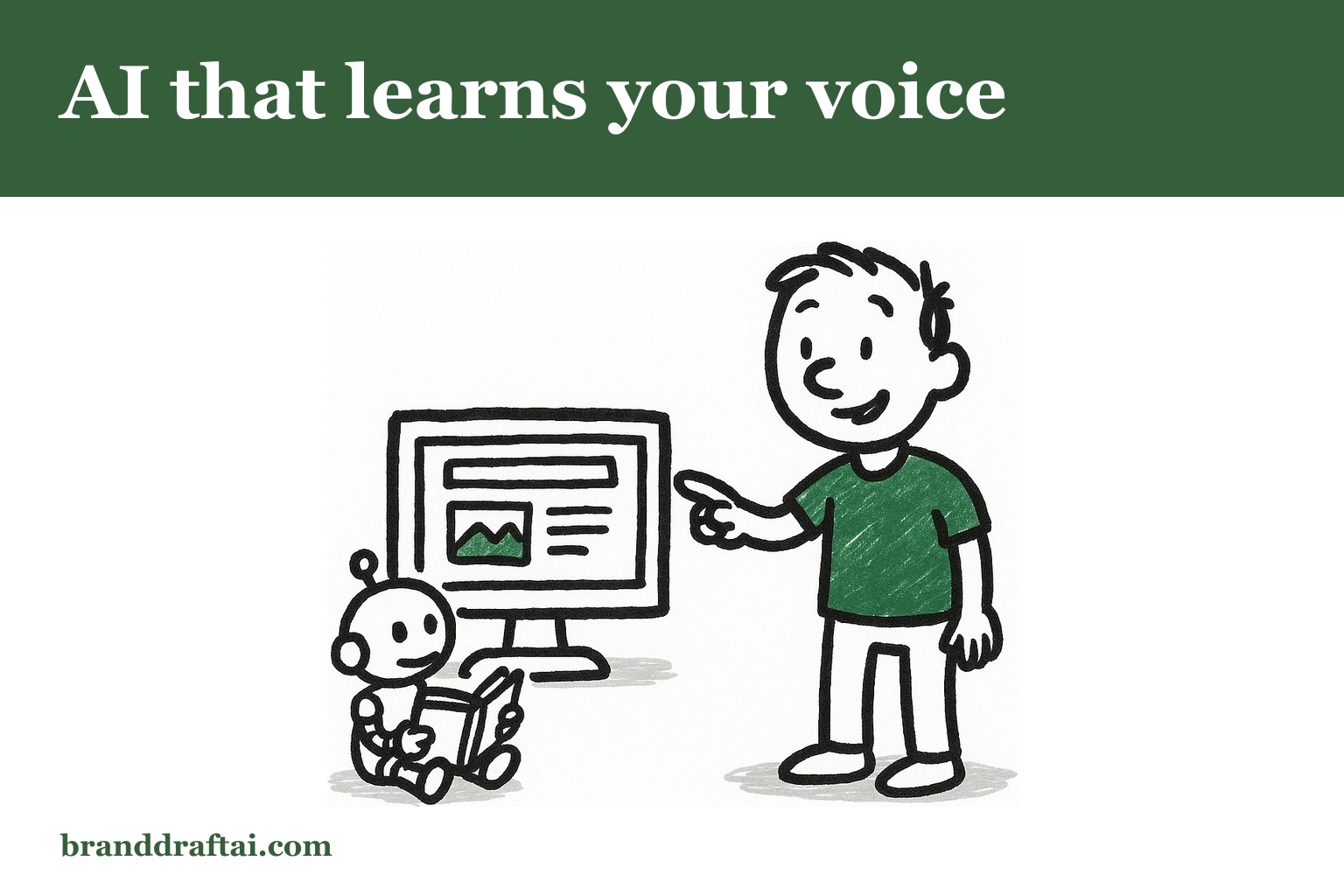
BrandDraft AI fixes this at the input level — it reads your website before generating anything, so the article knows your real product names, not just what businesses like yours usually call things. When it writes about your project management tool, it knows you call it TaskBridge, not "our solution."
This isn't about scraping content to rewrite. It's about understanding context before creating anything new. The AI learns how you explain your products, what language you use with customers, what makes your approach different from competitors.
A restaurant equipment supplier gets articles that mention their ProChef 3000 series instead of "commercial kitchen equipment." A financial advisor gets content about their retirement planning workshops, not generic wealth management services.
Why product names matter more than you think
Generic language creates a credibility gap readers notice immediately. When an article about your business avoids naming your actual products, it signals the writer doesn't know what they're talking about.
Customers who land on that content feel the disconnect. They came from your website where everything has specific names and clear descriptions. The article talks in circles around concepts they just saw explained directly.
Research across multiple studies consistently finds that users spend substantially more time on content referencing specific products and services versus content speaking in generalities. Specificity builds the kind of trust that makes readers feel understood — which is a different mechanism than information quality, and harder for generic AI to fake.
The voice problem nobody talks about
Every business explains itself differently. Some are technical and precise. Others are conversational and approachable. Some focus on process, others on outcomes.
Generic AI writing flattens these differences into the same corporate tone. The output sounds competent but anonymous, which works fine for some purposes and terribly for content marketing.
When the AI has read your existing content first, it picks up on these patterns naturally. A B2B software company that writes in bullet points gets articles with bullet points. A consulting firm that explains concepts through stories gets narrative-driven content.
This matters because voice consistency affects how readers perceive expertise. Inconsistent tone makes businesses seem scattered or inauthentic, even when the information is accurate.
Beyond product names: industry-specific knowledge
Reading your website gives the AI access to how you handle industry-specific concepts. Not just what you sell, but how you position it relative to alternatives.
A cybersecurity company that emphasises prevention over detection gets articles that lead with prevention. A marketing agency that specialises in manufacturing gets content that understands manufacturing sales cycles, not generic B2B advice.
Traditional AI tools might mention cybersecurity or manufacturing marketing, but they can't know your specific angle without reading your existing content first.
The time factor most people miss
Writers who use URL-reading AI spend less time editing and more time on strategy. Instead of fixing generic output to match the client's voice, they're refining content that already speaks the right language.
The difference shows up in revision cycles. Generic AI output often needs three or four passes to sound like it belongs to the business. Content generated from URL analysis typically needs one round of edits for tone and flow.
That's hours back in the writer's day and fewer frustrated clients asking why the content doesn't sound like them.
What this means for content that actually converts
Content marketing works when readers recognise the business behind the content. When someone lands on an article about inventory management and immediately thinks "this sounds like the software company I've been evaluating," the content is doing its job.
Generic content can't create that recognition because it doesn't contain the specific details that make businesses memorable. URL-reading AI can, because it knows those details before it starts writing.
The result is content that feels like a natural extension of the business instead of something bolted on by a content team working from brief notes.
And for businesses publishing content themselves, this changes what's possible without hiring writers who need weeks to understand the industry. The AI arrives already knowing the context.
Generate an article that actually sounds like your business. Paste your URL, pick a keyword, read the opening free.
Try BrandDraft AI — $9.99