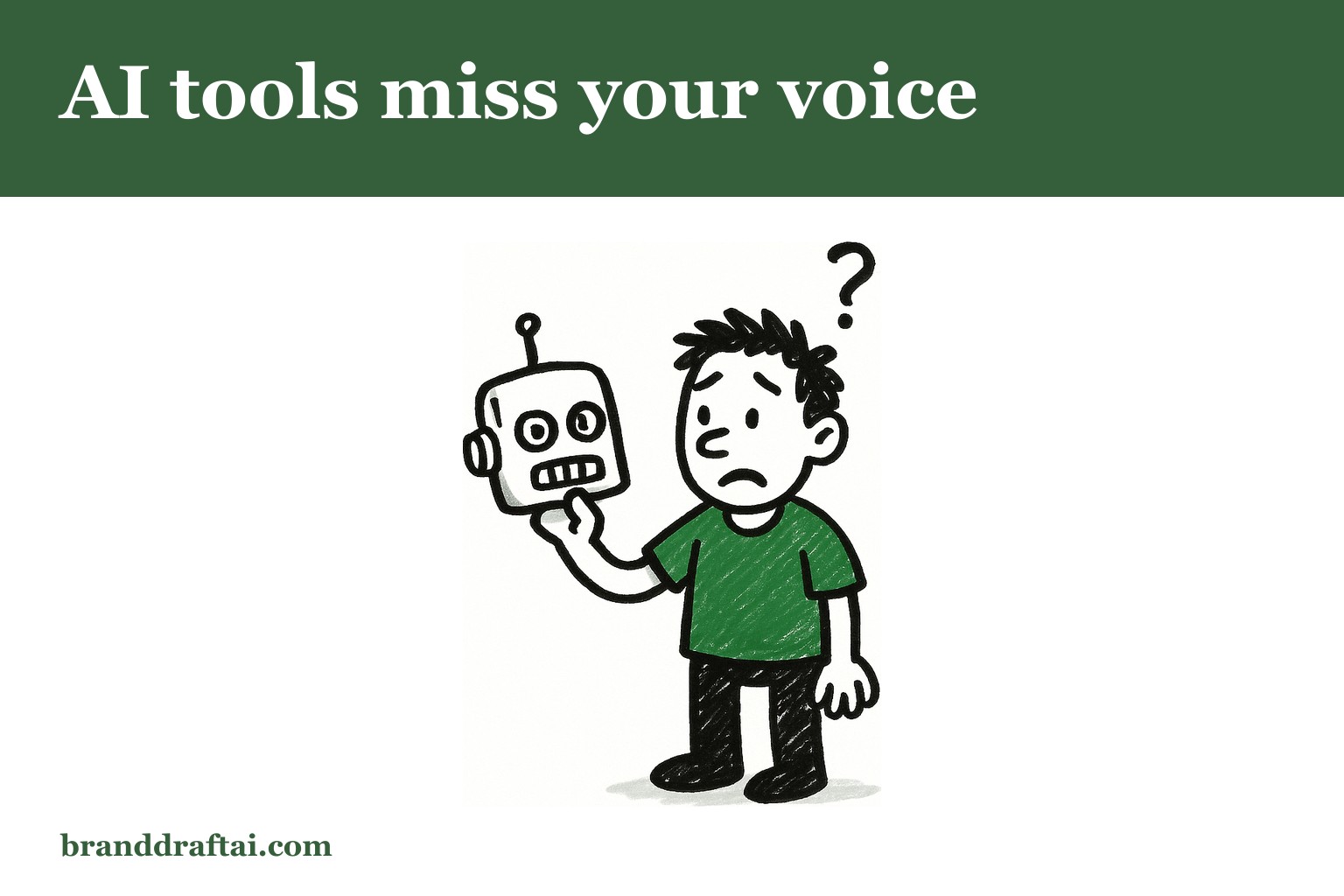

Why coaches and consultants get the worst results from generic AI writing tools
The brief said "write thought leadership content about digital transformation." The coach's expertise was helping family businesses navigate succession planning. The AI delivered 800 words about "leveraging synergies in today's dynamic landscape."
That gap between what you actually do and what AI thinks you do? It's not just awkward , it's expensive. Generic AI writing tools treat every business like a Fortune 500 company, every expert like they speak in buzzwords, every client like they care about "industry best practices."
Coaches and consultants get hit hardest because their business model depends on something AI can't fake: personal authority built on specific experience.
The personal branding trap nobody mentions
Most AI content sounds like it was written by committee. For a manufacturing company, that's merely bland. For a coach who charges $5,000 for a three-month engagement, bland content is a credibility killer.
Your clients hire you because of how you think about their problems, not because you can recite what everyone else already knows. When your content sounds like everyone else's content, you've just told prospects they could hire anyone.
The research backs this up in ways that should make consultants uncomfortable. A 2023 study from Content Marketing Institute found that 73% of B2B buyers can spot AI-generated content, and 61% say it reduces their trust in the vendor — particularly in categories where expertise is the product being sold. Consultants and coaches are buying in exactly the wrong category.
Why the generic approach fails coaches specifically
Generic AI tools work from the same training data everyone else uses. They know what "business coaching" looks like in general, but they don't know what your specific approach looks like.
Say you're a leadership coach who specialises in helping introverted executives. Generic AI will give you content about "communication skills" and "executive presence." It won't mention the specific frameworks you've developed for helping quiet leaders build influence without forcing extroversion.
Those frameworks are your differentiation. When content ignores them, you sound like every other leadership coach who claims to "unlock potential and drive results."
And yes, you could spend time editing every piece to add your specific angle , but that defeats the point of using AI to save time.
The methodology problem that compounds everything
Most consultants have developed their own way of doing things. Not just personality differences , actual methodologies with specific steps, tools, or assessment processes.
A financial advisor who's built a proprietary retirement planning system shouldn't be publishing articles about "the importance of financial planning." They should be writing about the specific problems their system solves that traditional approaches miss.
Generic AI doesn't know your methodology exists. It defaults to writing about your industry, not your approach to your industry. The result reads like someone researched your field for three hours and decided to explain it back to you.
When industry language works against you
Every profession has its jargon, and AI tools love jargon because it sounds authoritative. But coaches and consultants often succeed by translating complex concepts into language their clients actually use.
A business consultant who works with family restaurants doesn't talk about "operational efficiency metrics." They talk about "why your kitchen is backing up during the dinner rush." The second version shows they understand the actual problem.
Generic AI consistently chooses the first version because it sounds more professional. But professional jargon from someone who charges $200 an hour sounds like someone trying to justify their rates, not someone who gets the work.
The credibility gap gets expensive fast
Content that doesn't sound like you creates cognitive dissonance for prospects. They read your generic article about "change management strategies," then get on a discovery call where you start talking about the specific challenges of implementing new systems in family-owned businesses.
The disconnect raises questions: Does this person actually understand my situation, or are they just good at writing about it in general terms?
For consultants, doubt kills deals. When prospects can't tell the difference between your content and your competitors', they start shopping on price instead of expertise. That's exactly the position you don't want to be in when you're trying to command premium rates.
What works instead of the generic approach
The solution isn't abandoning AI , it's using AI that understands your specific business before it writes anything. BrandDraft AI reads your website first, so it knows what you actually call your methodology, which client problems you focus on, and how you explain complex concepts in plain language.
Instead of generic articles about leadership development, you get content that references your specific assessment tool and explains why traditional leadership training misses what introverted executives actually need.
The difference shows up immediately. Prospects read your content and think "this person gets exactly what I'm dealing with" instead of "this person knows a lot about leadership in general."
Getting AI to sound like your actual expertise
The fix requires AI that starts with your voice, not industry templates. That means feeding it your existing content, client testimonials, case studies, and methodology descriptions before asking it to write anything new.
Most coaches have years of content sitting in old blog posts, client emails, workshop materials, and presentation decks. That content contains your actual voice and specific expertise. Generic AI tools ignore all of that and start from scratch every time.
The result: content that sounds like you wrote it after understanding your client's problem, not like you copied it from someone else's framework.
Your expertise is specific. Your content should be too. When those two things align, prospects can tell the difference immediately , and they're willing to pay for it.
Generate an article that actually sounds like your business. Paste your URL, pick a keyword, read the opening free.
Try BrandDraft AI — $9.99