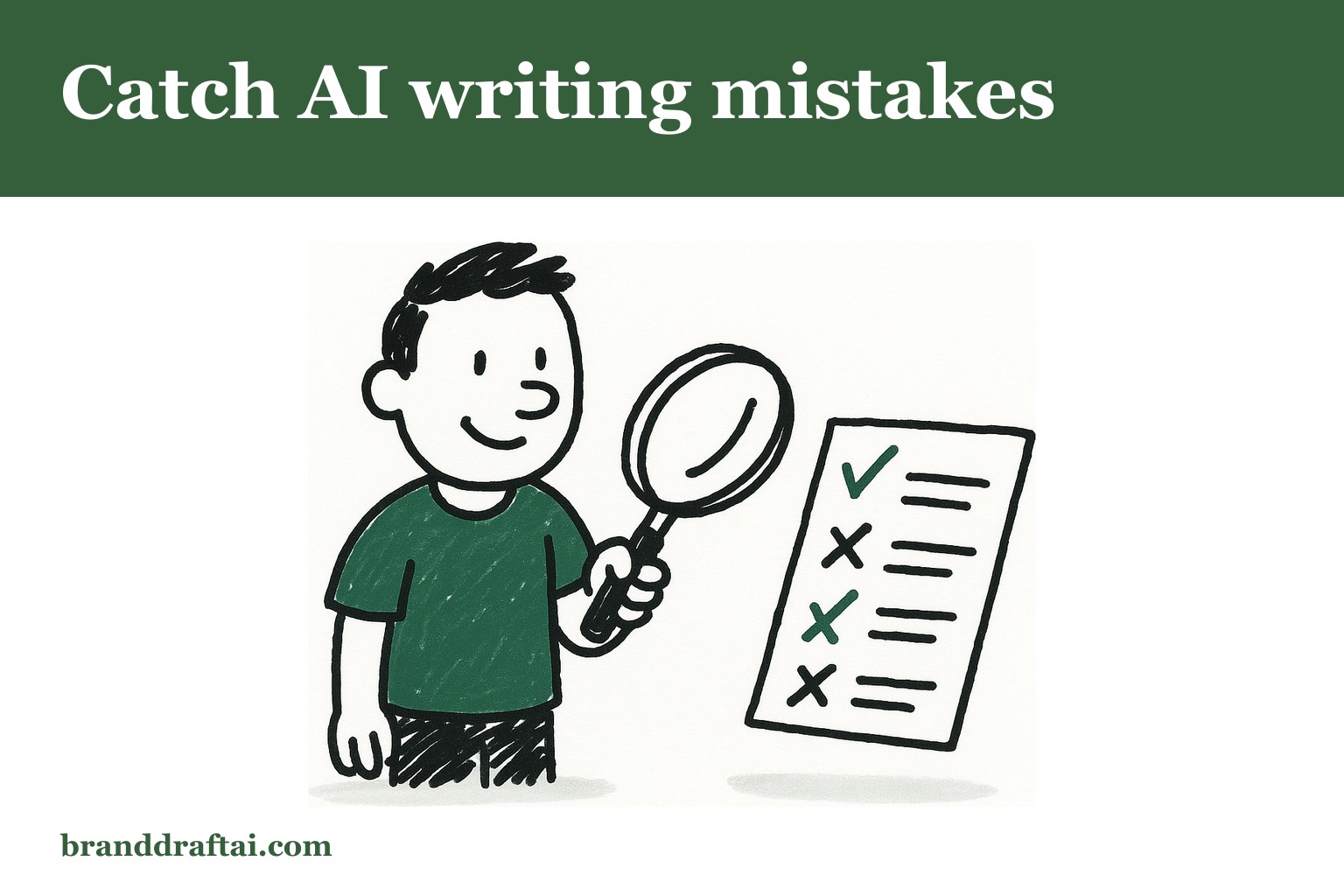

The fact-checking process for AI content that saves you from publishing errors
The article claimed their client's software integrates with 47 different platforms. The actual number was 12. The press release went out to 3,000 subscribers before anyone caught it.
AI writing tools don't just make minor mistakes, they fabricate statistics, misrepresent capabilities, and confidently state things that cost companies credibility. The pattern repeats: impressive first draft, quick approval, publication, then the slow realization that half the facts need correction.
The fix isn't better prompting. It's a systematic approach to catching errors before they compound into bigger problems.
The three types of errors AI creates
Not all AI mistakes look the same, and each type requires different verification methods.
Fabricated statistics appear most dangerous because they sound authoritative. "73% of B2B buyers prefer video content" lands with confidence even when the study doesn't exist. These errors hide behind precise percentages and research-sounding language. HubSpot's State of Marketing report documents this consistently.
Capability inflation happens when AI describes what software should do instead of what it actually does. A basic CRM becomes "enterprise-grade automation" with features the product roadmap hasn't reached yet.
Context shifting occurs when AI pulls accurate information from the wrong timeframe or market. Last year's pricing, discontinued features, or data from different geographic regions slip into current content without notice.
The first category requires external verification. The second needs product documentation. The third demands timeline awareness , and that's where most fact-checking processes for AI content break down.
Why standard proofreading misses AI errors
Traditional editing catches grammar, flow, and obvious factual errors. It assumes the writer knows the subject matter and made honest mistakes.
AI operates differently. It combines information from training data without understanding context, creating errors that sound completely reasonable. The fabricated statistic reads naturally. The inflated capability uses correct terminology. The outdated information fits the surrounding paragraphs.
Most editors check facts they question, not facts that sound confident. And AI-generated content sounds confident about everything.
The systematic verification approach
Effective fact-checking for AI content starts before reading the draft. You need three reference points: current product documentation, recent company communications, and verified external sources.
Document the ground truth first. Pull current product specs, feature lists, pricing pages, and any recent updates. If the content mentions capabilities, integrations, or technical details, these documents serve as the baseline. Don't rely on memory or assumptions about what the product does.
Flag every measurable claim. Statistics, percentages, dollar amounts, timeframes, and numerical comparisons all need verification. Create a simple list: the claim, the stated source, and a blank space for your verification. This systematic approach prevents you from skipping claims that sound reasonable.
Check dates on everything. AI pulls from training data without timestamp awareness. A feature launched last month might be described using information from two years ago. Website updates, press releases, and product announcements all need date verification.
Yes, this adds time upfront, but catching errors in draft saves exponentially more time than correcting them post-publication.
The signal patterns that indicate fabrication
Certain phrases consistently accompany AI-generated misinformation, and recognising these patterns accelerates the verification process.
"According to recent studies" without naming the source almost always signals fabrication. Real research gets cited specifically. Vague attribution covers for non-existent sources.
Overly precise statistics like "73.2% of businesses" often indicate AI invention. Real research typically reports rounder numbers or includes confidence intervals. The false precision attempts to create authority.
Industry-wide claims without context , "Most companies in this sector" or "The average business" , frequently contain outdated or irrelevant data. AI combines information from different time periods and markets without distinguishing context.
These patterns don't guarantee errors, but they mark sentences that need immediate verification.
Building verification checkpoints that actually work
The most reliable fact-checking systems build verification into the workflow, not after it.
Pre-publication review with source requirements. Every factual claim needs a verifiable source listed in the margin or comments. This forces verification during writing rather than after. The requirement alone eliminates most fabricated statistics because there's nowhere to hide unsourced claims.
Product team validation for capability claims. Marketing teams often don't know current technical limitations. A quick review from product development catches inflated capabilities before they reach customers who will test them.
Date stamps on all reference materials. Information sources older than six months get flagged for current verification. This prevents outdated pricing, discontinued features, or changed processes from appearing in current content.
BrandDraft AI addresses this issue by reading your actual website content before generating anything, so the output references current product information instead of generic industry assumptions.
The cost of getting this wrong
Published errors don't just embarrass, they accumulate credibility damage that affects future content performance.
Customer trust erodes when marketing claims don't match product reality. Sales teams field questions about features that don't exist. Support requests increase when published capabilities exceed actual functionality.
The pattern becomes self-reinforcing: AI tools trained on your published content perpetuate existing errors, creating new variations of the same mistakes. Bad information breeds more bad information.
Legal exposure increases when claims about compliance, certifications, or regulatory approval appear without proper verification. Some industries can't afford to publish first and correct later.
When verification slows you down too much
Comprehensive fact-checking takes time, and content deadlines don't always accommodate thorough verification. The temptation to skip steps intensifies under pressure.
Build verification time into content calendars from the beginning. Factor checking into project timelines rather than treating it as optional final step. Most fact-checking delays result from inadequate planning, not inherent slowness.
Develop template verification lists for common content types. Product announcements, case studies, and industry reports follow predictable patterns. Pre-made checklists accelerate the process without sacrificing thoroughness.
Create tiered verification based on content risk. High-stakes announcements get full verification. Internal blog posts might need lighter checking. Match the intensity to the consequences of errors.
The goal isn't perfect information, it's reliable information that won't require embarrassing corrections later. Sometimes slower publication beats damaged credibility.
The verification habits you build now determine whether AI writing tools become productivity boosters or credibility risks. Each uncaught error makes the next one more likely, while systematic checking creates content that actually represents your business accurately.
Generate an article that actually sounds like your business. Paste your URL, pick a keyword, read the opening free.
Try BrandDraft AI — $9.99