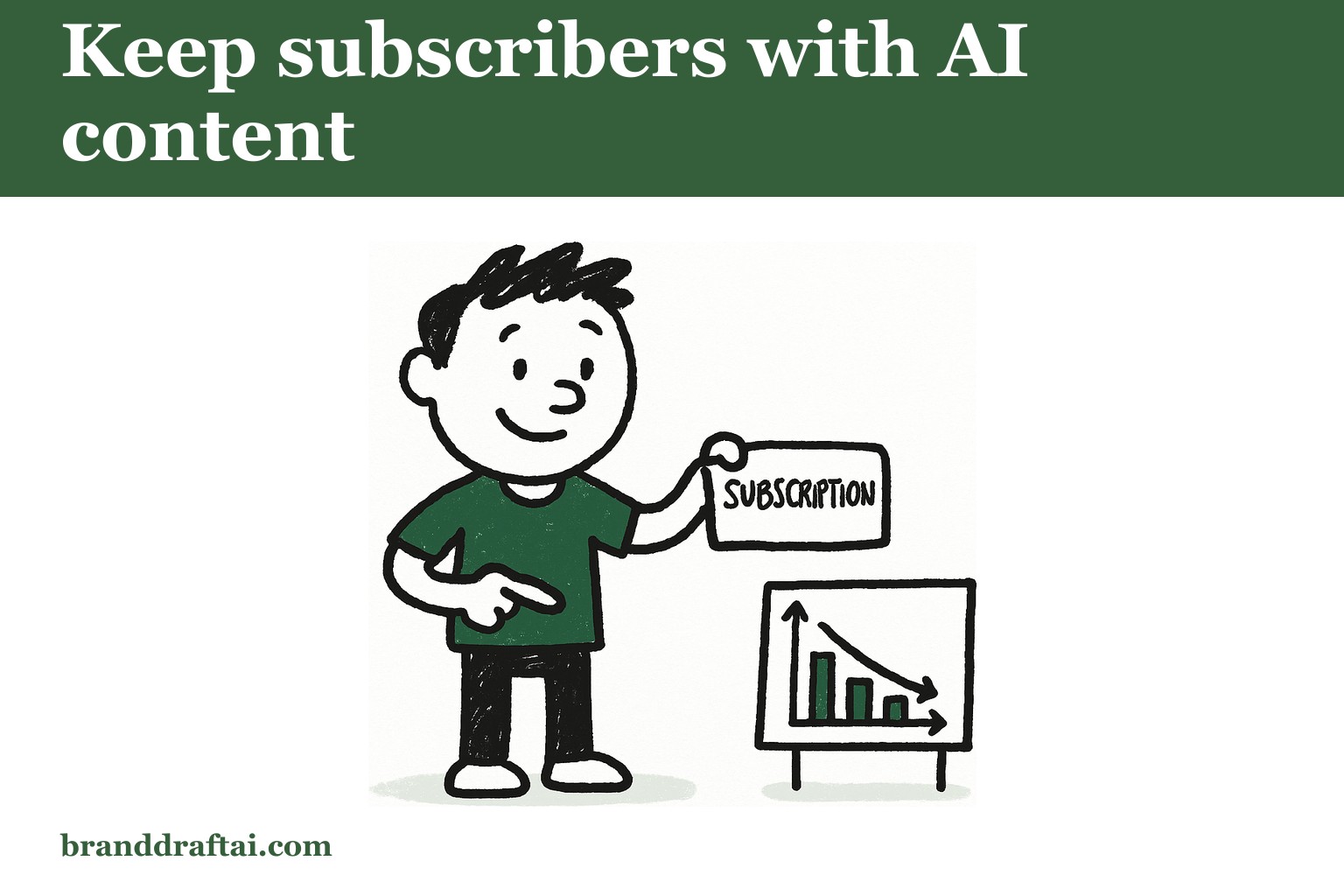

How subscription businesses use AI content to reduce churn and drive renewals
The subscription renewal email went out Tuesday. By Thursday, the cancellation requests started rolling in. Same pattern every quarter , the billing reminder hits, subscribers remember they're paying for something they haven't used in weeks, and the churn spike follows.
The problem isn't the product. It's the silence between payments.
Most subscription businesses use AI content like a megaphone , blast generic tips, industry news, and product updates hoping something sticks. But the subscribers who stick around aren't responding to volume. They're staying because the content makes them feel like the subscription is working for them personally, not just existing in their inbox.
The Real Cost of Generic Subscriber Content
Generic content doesn't just get ignored. It actively trains subscribers to tune out everything from your business.
When your weekly email talks about "maximising productivity" instead of the specific workflow your software actually improves, subscribers learn that your content won't help them use what they're paying for. And yes, they notice the disconnect between the generic advice and their actual subscription experience.
The pattern shows up in the data. According to research from Recurly, subscription businesses lose 9% of subscribers monthly on average , but companies with personalised content retention strategies see churn rates 23% lower than industry averages.
That's not just about addressing people by name. It's about content that connects to what subscribers actually do with your product, in language that matches how your business explains itself.
Why Most AI Content Misses the Retention Mark
Standard AI writing tools generate content about subscription boxes, not your specific meal kit service. They write about "productivity software," not your project management platform with its unique feature set.
The output sounds professional but feels disconnected from what subscribers signed up for. It's like getting diet advice from someone who's never seen your kitchen , technically correct but practically useless.
BrandDraft AI reads your website before generating anything, so the content references actual product names and terminology instead of generic industry language. When subscribers read about features they recognise, they're reminded why they subscribed in the first place.
More importantly, specific content gets used. Subscribers forward emails about features they didn't know existed. They bookmark tutorials that solve problems they're actually facing.
Content That Bridges Billing Cycles
Retention content works differently than acquisition content. Instead of convincing someone to start, it reminds them why they haven't stopped.
The most effective subscriber content answers the question subscribers don't ask out loud: "Am I getting enough value from this to justify next month's payment?" But they don't answer it directly. They demonstrate value through usefulness.
A meditation app doesn't send generic wellness tips. They send short breathing exercises for specific situations their data shows subscribers struggle with , Monday morning anxiety, post-meeting stress, bedtime wind-down routines.
Each piece of content becomes a micro-interaction with the core product, not just marketing material about it.
The Engagement Patterns That Predict Renewal
Subscribers who engage with educational content are 34% more likely to renew, according to data from ChartMogul. But not all educational content works the same way.
The content that drives renewals teaches subscribers to use their subscription more effectively, not just more frequently. It's the difference between "try our new feature" and "here's how to set up automated reports so you stop manually pulling data every Monday."
And frankly, most subscription businesses already know what their subscribers need help with — they have the support tickets, usage analytics, and feature adoption data. The problem is turning that knowledge into content at the pace subscribers expect it. HubSpot's subscription marketing research found that churn reduction content — tutorials, use-case guides, feature walkthroughs — consistently shows stronger retention ROI than acquisition-focused content in subscription models.
Timing Content Around the Subscription Lifecycle
New subscribers need different content than long-term users. Someone three days into a free trial doesn't need advanced tips , they need to understand the basics well enough to see value.
But most businesses batch their content creation, sending the same newsletter to everyone regardless of where they are in the subscription journey. The result? New users get overwhelmed, experienced users get bored, and both groups inch closer to canceling.
Smart subscription businesses map content to subscriber stages. Onboarding sequences that actually teach the core workflow. Feature announcements that acknowledge what subscribers already know. Renewal reminders that highlight usage rather than just requesting payment.
This isn't about complex automation , it's about acknowledging that someone who signed up yesterday has different needs than someone who's been subscribed for six months.
Making Product Updates Feel Personal
Product update emails usually read like changelog entries. "We've added new reporting capabilities to the dashboard." Technical, accurate, and completely forgettable.
The updates that drive engagement connect new features to subscriber problems. Instead of announcing the reporting capabilities, explain what subscribers can now track that they couldn't before , and why that matters for their specific workflow.
It's the difference between announcing a feature and demonstrating its relevance. Subscribers can see themselves using the update rather than just knowing it exists.
The best product updates feel less like announcements and more like solutions arriving at exactly the right time. They make subscribers think "finally" instead of "okay, noted."
When Content Strategy Becomes Retention Strategy
Content becomes retention strategy when it changes how subscribers use their subscription, not just how they feel about it.
A project management software company sends weekly templates their users can implement immediately. A language learning app provides conversation starters based on lessons subscribers have completed. A fitness subscription shares workout modifications for equipment subscribers actually own.
Each piece of content increases the subscriber's investment in the product , not financially, but practically. They've customised it, learned from it, built habits around it.
By renewal time, canceling doesn't just mean losing access to a tool. It means losing the workflows, templates, and knowledge they've built using that tool. The content creates switching costs that go beyond the subscription price.
That's retention that lasts beyond the next billing cycle , because subscribers aren't just paying for access anymore. They're paying to keep something they've made their own.
Generate an article that actually sounds like your business. Paste your URL, pick a keyword, read the opening free.
Try BrandDraft AI — $9.99