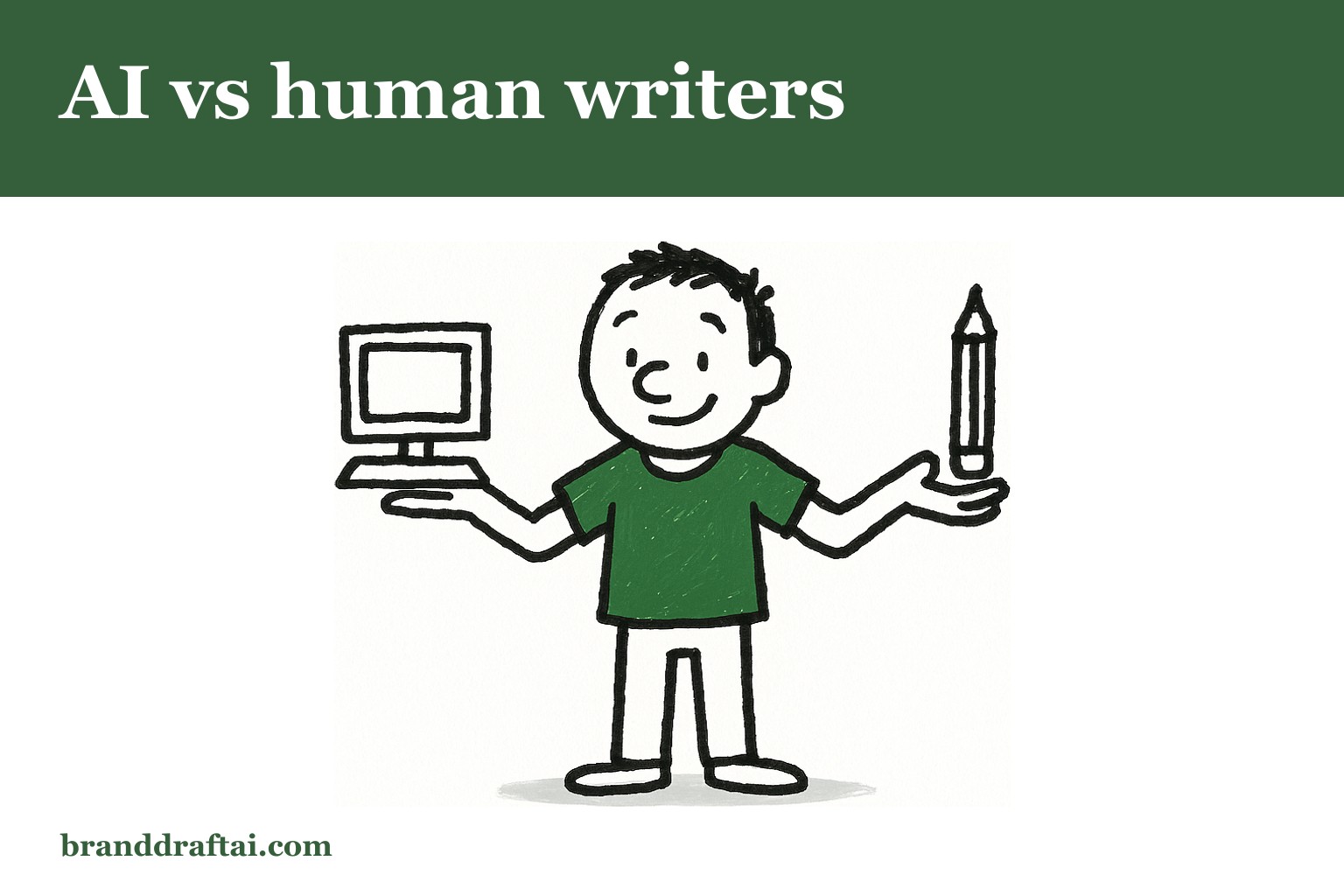

AI writing tool vs hiring a writer — an honest comparison for 2026
The deadline was three days away. The brief said "3,000 words on cybersecurity trends." You had two options: spend $600 on a freelancer who might nail it or might turn in something that reads like every other cybersecurity article, or fire up an AI tool and spend the afternoon editing generic output into something that doesn't sound like a robot wrote it.
Neither choice felt right because both missed the real problem. The question isn't whether AI or humans write better , it's whether either one actually understands what your business does differently.
When AI tools actually work (and when they don't)
AI writing tools excel at one thing: producing clean, grammatically correct sentences about topics with established patterns. Product descriptions, basic how-to articles, social media captions , anything where the information exists in predictable formats across thousands of similar businesses.
The breakdown happens when your business doesn't fit the pattern. If you sell "enterprise software solutions," AI will generate perfectly adequate content because it's trained on millions of similar phrases. If you sell a custom inventory management system for mid-size furniture retailers, AI will default to generic software language because it has no context for your specific market.
Speed is the obvious advantage. Generate a 1,200-word article in three minutes versus waiting five days for a writer to research, draft, and revise. Cost follows close behind. HubSpot's AI tool adoption research found that teams using AI for first drafts reduced time-to-publish by 60% on average — but also found that the editing time increased proportionally when the AI wasn't given enough brand context upfront.
But speed and cost only matter if the output works. And here's where most AI writing tool vs hiring a writer comparisons miss the point: neither option automatically knows your business well enough to write about it accurately.
What writers bring that AI doesn't
A good writer asks questions AI never thinks to ask. They notice when your product descriptions don't match how you talk about the product in sales calls. They catch industry jargon that makes sense to you but confuses customers.
Writers also bring judgment about what matters. AI treats every piece of information equally , your company's founding story gets the same weight as a minor product feature. A writer understands that some details deserve emphasis while others belong in a footnote.
The research process differs completely. AI draws from its training data, which means it knows what information exists but not what information is current, relevant, or accurate for your specific situation. Writers can interview your customers, review your actual sales data, and understand what problems your business actually solves versus what problems the industry talks about.
And then there's voice. Not just writing style, but the perspective that comes from understanding who's reading and why they care. AI can mimic tone, but it can't develop point of view.
The real cost breakdown (beyond the obvious numbers)
AI subscription: $20-50 per month. Freelance writer: $200-500 per article. The math looks straightforward until you factor in editing time.
Generic AI output needs heavy revision. You'll spend 2-3 hours fact-checking, adding specific details, and rewriting sections that sound like they could apply to any business in your industry. That editing time has a cost , either your time or someone else's at your hourly rate.
Writers deliver drafts closer to publication-ready, but they also deliver missed deadlines, inconsistent quality between projects, and the occasional complete miss where they fundamentally misunderstood the assignment. Bad freelance content costs more than AI because you've paid premium rates for something you still can't use.
There's also the hidden cost of generic content. Articles that could describe any business in your space don't differentiate you from competitors. They don't build authority or trust. They check the "we published something" box without moving business metrics. The opportunity cost of generic content , whether from AI or humans , often exceeds the production cost.
Why traditional AI gets your brand wrong
Most AI writing tools work the same way: you describe what you want, they generate text based on their training data. The output sounds professional but generic because the AI has no context about your specific business, products, or customers.
Your inventory management software becomes "a comprehensive solution for streamlining operations." Your three-step onboarding process becomes "a seamless integration experience." The specific features that differentiate your product disappear into industry boilerplate.
This happens because traditional AI tools start writing before they understand what you do. They're responding to prompts, not analysing your actual business. BrandDraft AI reads your website first, so the article it generates uses your actual product names and business language rather than the category defaults.
The difference shows up immediately. Instead of "our platform," you get your actual platform name. Instead of "solutions," you get specific product categories. The content sounds like it came from someone who spent time learning your business, not someone working from a generic prompt.
When humans miss the mark
Hiring a writer doesn't guarantee brand-accurate content either. Freelancers often work from the same limited information AI uses , your website, maybe a competitor analysis, possibly a brief phone call.
The writer spends three hours researching your industry and six hours writing about it. They understand the general market but not your specific position within it. The resulting article hits the right topics but misses your angle, uses your competitors' language instead of yours, or emphasises features that aren't actually your strongest selling points.
Good writers solve this by asking better questions and doing deeper research. But finding good writers takes time, and training them on your brand takes even more time. By the time a freelancer truly understands your business, you've invested weeks of back-and-forth and multiple revision rounds.
The hybrid approach that actually works
The best content often combines both approaches, but not in the way most people think. The instinct is to use AI for first drafts and humans for editing, but that still starts with generic content as the foundation.
A better approach: use AI that already understands your brand for structure and key points, then have a writer add strategic thinking and polish. Or have writers focus on high-level messaging and strategy while AI handles execution of specific content types.
This works because it plays to each tool's strengths. AI excels at consistency and volume once it knows your brand context. Writers excel at judgment calls about positioning and audience development. Neither has to do the other's job.
The key is getting the brand context right from the start. Whether you're working with AI or humans, generic input produces generic output. Specific, detailed information about your actual business produces content that sounds like it came from inside your company.
Making the decision for your situation
Choose AI when you need consistent content at scale and your business fits established patterns. E-commerce product descriptions, routine blog posts about industry trends, social media content , anywhere the format is predictable and the information is straightforward.
Choose human writers when positioning matters more than volume. Thought leadership pieces, complex case studies, content that establishes your unique perspective in the market. Anything where judgment and strategic thinking matter more than efficient production.
The decision often comes down to time horizons. AI works for immediate needs and ongoing content production. Writers work for strategic content that builds long-term authority and differentiation.
But both options fail if they don't start with accurate information about your business. Generic prompts produce generic content whether the writer is human or artificial. The companies getting the best results from either approach are the ones that invest time upfront in providing detailed, specific context about what makes their business different.
Neither AI nor human writers can read your mind. But given the right information, both can produce content that sounds like it came from someone who actually understands what you do.
Generate an article that actually sounds like your business. Paste your URL, pick a keyword, read the opening free.
Try BrandDraft AI — $9.99