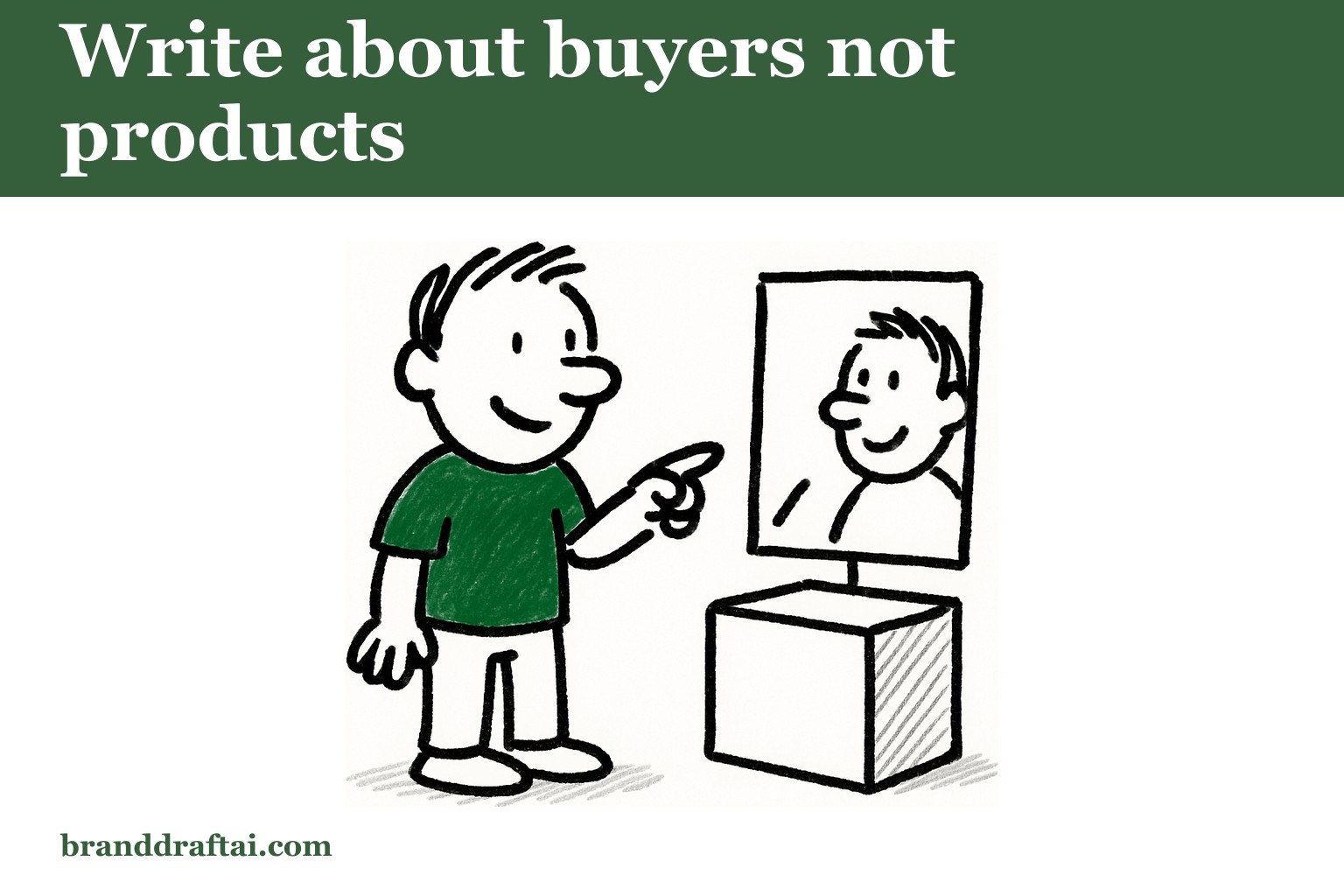

Why B2C content fails when it describes the product instead of the buyer
The skincare brand spent three paragraphs explaining hyaluronic acid's molecular weight and water retention properties. Their bounce rate was 73%. Meanwhile, the brand that wrote "wake up looking like you got eight hours of sleep" sold out their entire inventory in six weeks.
The difference wasn't product quality. Both serums had identical ingredients. But one company described what their product was, while the other described who their customer became.
Most B2C brands make this backwards. They write about their product's features, benefits, and technical specifications. They explain what it does, how it works, why it's better. And yes, this information matters for search rankings and comparison shoppers. But it's not what drives the purchase decision.
The buyer isn't shopping for your product
Walk through any Target aisle and watch people shop. They're not reading ingredient lists on shampoo bottles. They're not comparing thread counts on sheets. They're looking at packaging, scanning headlines, making split-second decisions based on who they want to be.
The shopper picking up the expensive face wash isn't buying glycolic acid and peptides. She's buying the version of herself who has time for a proper skincare routine. The guy choosing organic pasta sauce isn't buying tomatoes and basil. He's buying the version of himself who feeds his family well without spending hours cooking.
This isn't marketing psychology theory. It's observable behaviour that happens millions of times daily. People buy identity first, product second. Your content needs to match that sequence.
Why feature-focused content loses the emotional sale
Product features create a logical argument. "This mattress has memory foam, cooling gel, and a 20-year warranty." The reader processes this information, compares it to competitors, maybe bookmarks the page for later consideration.
B2C content fails when it assumes logic drives the buying decision. But purchasing decisions happen in the emotional brain first, then get justified with logic afterward. The customer who wants to feel pampered doesn't care about thread count specifications. She wants to know she'll sink into luxury every night.
Features tell the reader what they're getting. Identity tells them who they're becoming. And becoming is always more compelling than getting.
The identity-first approach that actually converts
Start with the person your customer wants to be. Not demographic data or buyer personas, but the aspirational version of themselves that your product makes possible.
The coffee subscription box isn't selling beans from Guatemala with notes of chocolate and citrus. It's selling the morning ritual of someone who takes coffee seriously. The meal kit service isn't selling pre-portioned ingredients and recipe cards. It's selling the identity of someone who cooks dinner from scratch on weeknights.
This shift changes everything about how you write. Instead of leading with product specifications, you lead with the moment of transformation. Instead of explaining what the product contains, you describe what the customer experiences.
What identity-based content looks like in practice
The difference shows up in the first sentence. Traditional product-focused copy might open with "Our premium yoga mat features non-slip rubber backing and eco-friendly materials." Identity-based content starts with "Hold your warrior pose without worrying about slipping."
One approach describes the mat. The other describes the confident yogi who owns it.
The content structure follows the customer's emotional journey rather than the product's feature list. You're not building a case for why this product is superior. You're painting a picture of who the customer becomes when they use it. The technical details still matter, but they come after you've established the identity connection, not before.
Why this works for search and conversion
Identity-based content performs better in search results because people don't just search for products. They search for outcomes, feelings, and solutions to identity gaps. The person googling "skincare routine for busy moms" isn't looking for ingredient lists. She's looking for a way to feel put-together despite having no time.
When your content matches these identity-driven searches, it captures traffic that product-focused content misses entirely. And that traffic converts at higher rates because the reader already sees themselves in the content before they see the product.
This is where most brands get stuck. They know their products inside and out, but they struggle to write from the customer's identity perspective. BrandDraft AI reads your existing website content before generating anything, so it understands both your actual products and how your customers talk about their goals, then creates content that connects the two naturally.
The subtle art of weaving product details into identity
You can't ignore product features completely. Search algorithms need that information, and some customers do want technical details. The key is sequencing. Lead with identity, then layer in the features as proof that this product delivers the transformation.
"Sleep through the night without waking up overheated" connects to identity. "Thanks to the cooling gel layer and breathable bamboo cover" provides the technical backing. The feature serves the identity claim instead of competing with it.
This approach satisfies both types of readers. The emotion-driven buyer gets the identity connection they're looking for. The research-focused buyer gets the detailed information they need to justify the purchase to themselves. HubSpot's B2C content conversion research found that product pages layering both types of content — identity language at the top, specification detail further down — consistently outperform pages optimised for only one audience.
When your content describes buyers instead of products
The shift feels risky at first. Writing about identity requires taking a position about who your customer is and who they want to become. Product features feel safer because they're factual and objective. But safe content doesn't drive purchase decisions in competitive markets.
Your competitors can copy your features. They can match your pricing and improve your specifications. But they can't replicate the specific identity connection you build with your audience. That relationship becomes your actual competitive advantage.
The brands that dominate their categories understand this intuitively. They don't win by having better products. They win by better understanding who their customers want to be, then creating content that makes that transformation feel both possible and immediate.
Generate an article that actually sounds like your business. Paste your URL, pick a keyword, read the opening free.
Try BrandDraft AI — $9.99