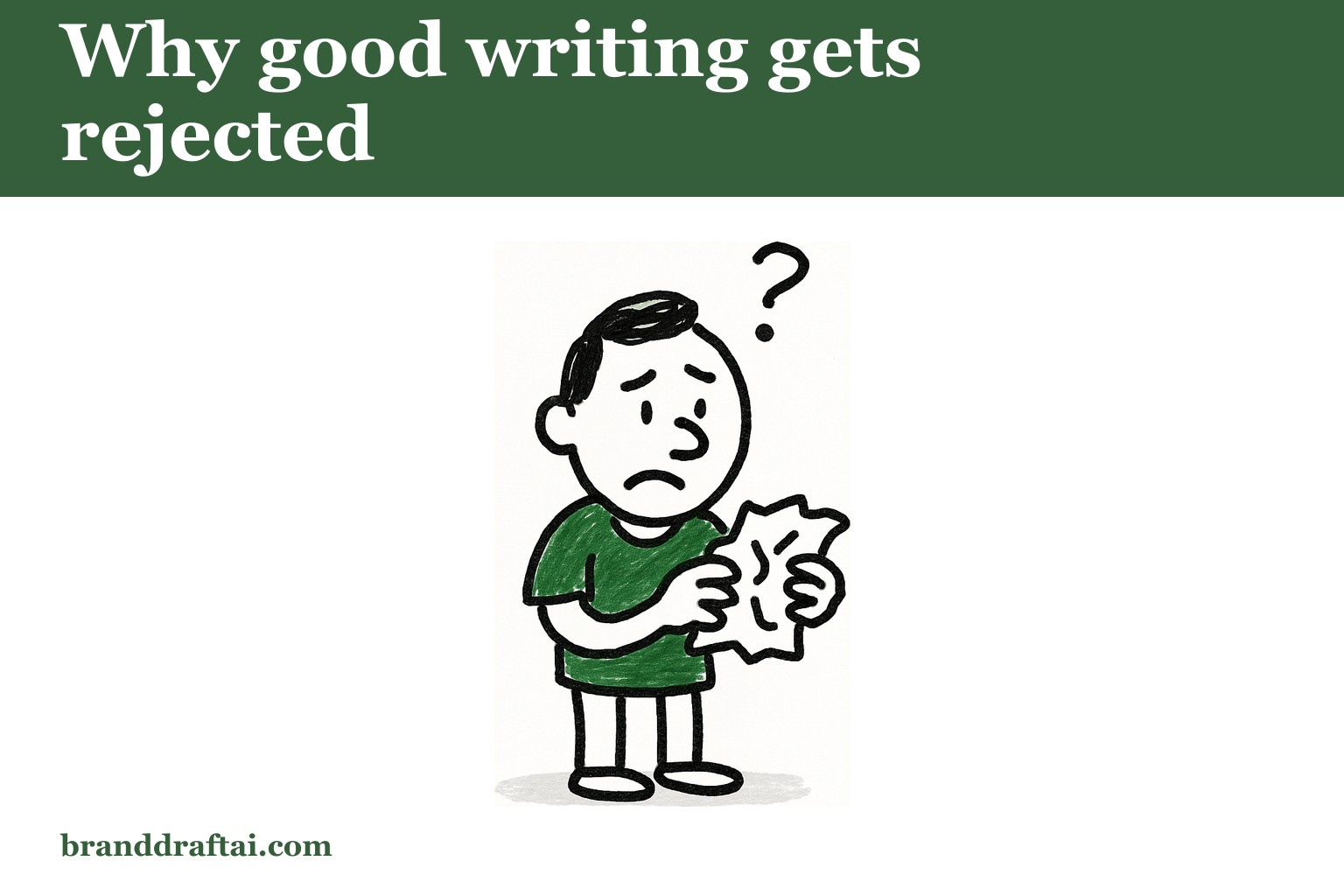

Why your best writing still gets rejected and what that actually tells you
The client sent back your third draft with "still not quite right" in the subject line. The writing was sharp, the research solid, the structure clean. You'd hit every brief requirement and deadline. But something about it wasn't landing.
This pattern repeats across industries and experience levels. Writers who consistently produce quality work suddenly find themselves in revision loops that make no sense. The feedback stays vague while the rejections stay consistent.
The problem isn't writing quality. It's brand fit.
When good writing sounds like the wrong company
Most rejection feedback focuses on surface issues because the real problem is harder to name. "Could you make it more engaging?" actually means "this doesn't sound like us." "Can we punch up the value prop?" translates to "you're using generic industry language instead of how we actually talk about what we do."
The writing itself might be excellent. But if it sounds like it came from any company in the space rather than this specific one, it gets sent back.
This happens because most content creation starts with research about the industry rather than the brand. Writers study competitor content, industry reports, and general best practices. HubSpot's content revision research consistently finds that the most common rejection reason for otherwise well-written content is "doesn't sound like us" — which is almost never a writing quality issue, and almost always a research sequence issue.
The brief that's actually two different documents
Content briefs typically specify topic, word count, target keywords, and maybe some competitor examples. What they don't include is the institutional knowledge that makes internal writing sound right.
There's the written brief, then there's the unwritten context: how this company actually describes its products, which benefits they lead with, what language they avoid, how formal or casual their tone runs. That context lives in the client's head, not in the project specs.
When external writers work from the written brief alone, they fill gaps with industry standards. The output follows content marketing best practices but doesn't reflect how this business actually communicates. And honestly, that gap is hard to bridge through email exchanges and revision notes.
Why brand voice guides miss the mark
Brand voice documents try to solve this by defining personality traits and tone guidelines. "Professional but approachable." "Expert yet accessible." "Confident without being arrogant." These descriptions are so broad they could describe any B2B company.
The real voice lives in how the business explains complex products simply, which features they emphasise, how they handle technical specifications. It's in the actual words they use for their services and the benefits they highlight first.
A cybersecurity company might describe their product as "threat detection software" in the brief but actually call it a "security monitoring platform" throughout their website. That single terminology difference affects everything from headlines to calls-to-action.
The research that nobody mentions
The strongest writers develop unofficial research methods for understanding brand context. They read every page of the client's website, not just the brief. They study how the company describes products in FAQs versus marketing pages. They note which customer pain points get the most attention.
This deep dive into actual brand language is what separates content that gets rejected from content that gets approved on first review. But it's time-intensive work that's rarely built into project timelines or budgets.
Most content workflows assume that good writing skills plus topic expertise equals on-brand content. The missing piece is brand fluency, and that takes dedicated research time that standard project scopes don't account for.
When the tool reads before it writes
The gap between generic industry content and brand-specific writing is exactly what drove the development of tools that analyse company websites before generating content. BrandDraft AI reads your entire website first, learning your actual product names, terminology, and how you position different services before writing anything.
Instead of starting with industry best practices and trying to customise later, it starts with your brand language and builds from there. The output references your actual offerings and uses your established terminology rather than generic industry language.
What approval on first draft actually requires
Content that doesn't require revisions demonstrates understanding of three layers: the topic, the audience, and the brand. Most writers nail the first two but miss the third because they don't have enough brand context to work with.
The companies that get fewer revision cycles build that brand context into their content process upfront. They provide writers with terminology lists, product positioning documents, and examples of existing content that hits the right tone. Or they use tools that extract that information automatically.
It's not about writing talent. It's about having enough brand-specific information to write something that sounds like it came from the right company. That information exists, it's just scattered across websites, sales materials, and institutional knowledge rather than concentrated in content briefs.
The hidden cost of revision cycles
Rejection and revision cycles cost more than just time. They erode the working relationship between clients and writers. What starts as "just needs a few tweaks" becomes a pattern of miscommunication that makes both sides question the partnership.
Writers start to doubt their instincts. Clients start to assume that clear communication is impossible. The real issue, though, is that neither side has access to the brand context that would prevent the mismatch from happening in the first place.
Good writing that consistently gets rejected usually means the content creation process is missing a step, not that the writing needs to improve.
Generate an article that actually sounds like your business. Paste your URL, pick a keyword, read the opening free.
Try BrandDraft AI — $9.99