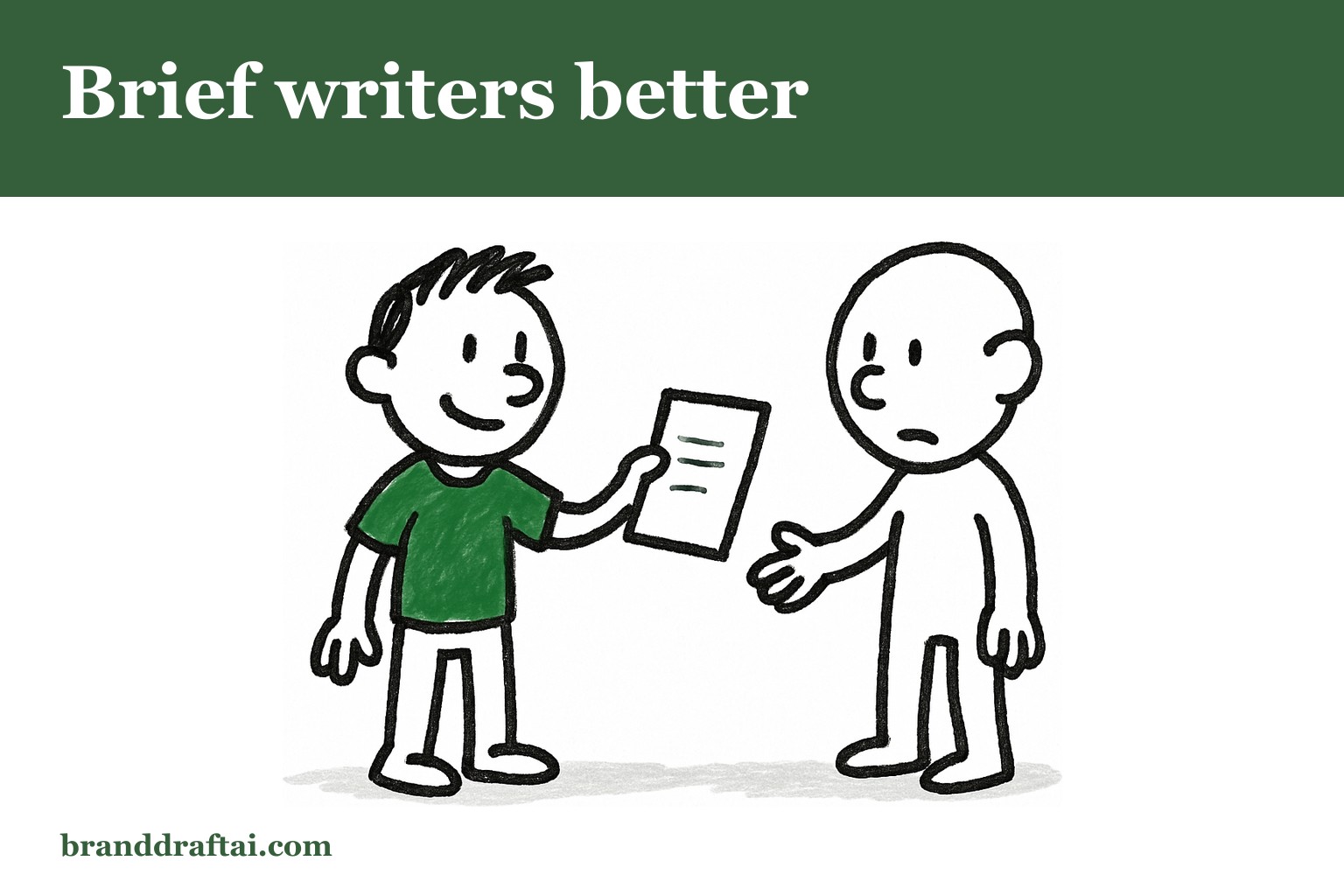

How to brief external writers so revisions drop below two rounds
The writer delivered Thursday's draft. You read three paragraphs about "innovative solutions" and "cutting-edge technology" before realizing they'd never actually looked at your website. The product has a name. It does specific things. None of that made it into the content.
This happens because most content briefs focus on what to write about instead of what to sound like. The difference between those approaches is also the difference between two rounds of revisions and six.
What happens when briefs only cover the topic
Standard content briefs list keywords, word count, and a few bullet points about what to cover. Writers fill in the blanks with generic industry language because that's all they have to work with.
The result reads like it could be about any business in your space. Product names get replaced with "our platform." Specific features become "robust capabilities." Your actual value proposition disappears under a layer of business-speak that sounds professional but says nothing.
And yes, this creates more work for everyone , writers spend time researching after they should have started writing, and you spend time explaining why the draft misses the mark.
The brief that cuts revisions in half
Writers who brief external writers effectively don't just explain the topic. They explain how the business talks about itself, what language it avoids, and what specific details matter most.
Start with voice, not subject matter. Include three sentences the business owner would actually say about their product or service. Not marketing copy , the words they use in real conversations with customers.
Then add the specifics that separate this business from every other one: product names, terminology they use differently, the problems they solve that competitors don't address. This isn't background research the writer might find helpful. It's the foundation everything else gets built on.
Brand notes that actually guide decisions
Most brand guidelines sit in a folder somewhere and never influence day-to-day content decisions. The brand notes that reduce revisions answer the questions writers face while writing.
When they're deciding between two ways to phrase something, what pushes the choice toward brand-appropriate language? When they're explaining a complex concept, does this business prefer simple analogies or detailed explanations? When they're describing benefits, does the focus stay on features or outcomes?
These decisions happen in every paragraph. Writers default to their own instincts when they don't have guidance. Give them guidance that works at the sentence level.
Context that prevents generic output
Writers produce generic content when they lack context about what makes this business different. Not different in the abstract , different in ways that show up in how they explain their work.
Include examples of how the business describes its main service or product. Not the elevator pitch version, but the explanation that comes up when a customer asks follow-up questions. What details do they emphasise that other businesses in the space don't mention?
BrandDraft AI reads your website before generating anything, so the output references actual product names and terminology instead of falling back on industry generics. But external writers need that same context delivered intentionally.
Also include what the business doesn't do or doesn't emphasise. If everyone in the industry talks about "innovation" but this business focuses on reliability, that shapes every section of the content.
Why the examples section does heavy work
Examples in content briefs often get treated as nice-to-have context. They're actually the most practical part of the brief because they show writers what good looks like for this specific business.
Include two types: examples of content that nailed the voice, and examples of content that missed it. Writers learn faster from seeing both sides than from reading abstract descriptions of what to aim for.
Point to specific sentences or paragraphs, not entire pieces. "This paragraph explains our main feature without using the word 'platform' once , that's the approach we want" gives writers something concrete to model.
The details that show you've thought it through
Briefs that reduce revisions include details that prove the briefer understands both the business and the content challenge. Industry context that shapes how this particular piece should approach the topic. Audience details that go beyond demographics to explain what these readers already know and what they're trying to figure out.
Mention which competitor approaches to avoid and why. If everyone in the space structures these articles one way but this business benefits from a different approach, explain the reasoning. Writers can follow instructions, but they work better when they understand the strategy.
According to a Content Marketing Institute study, businesses that provide detailed creative briefs see 40% fewer revision requests on external content projects.
What happens when context travels with the content
The best content briefs create a feedback loop. Writers deliver drafts that sound more like the actual business, which means revisions focus on refining ideas instead of correcting voice and approach.
This changes the revision process from explaining what went wrong to building on what worked. Writers learn the business voice faster, and future briefs can reference previous successful pieces as examples.
The business owner spends less time in revision cycles and more time on content that actually serves the business goals. Writers develop confidence in their understanding of the brand, which shows up as stronger first drafts on subsequent projects.
Content that sounds like it came from inside the business instead of from someone who spent an afternoon reading the website. That's what detailed briefs make possible, and it's what turns external writers into extensions of the team instead of vendors who need constant course correction.
Generate an article that actually sounds like your business. Paste your URL, pick a keyword, read the opening free.
Try BrandDraft AI — $9.99