
The content approval bottleneck and how to break it in 2026
The email came back with tracked changes. Seventeen of them. The writer had spent three days crafting the piece, the client had spent forty minutes marking it up, and now it sits in someone's inbox waiting for "final approval." That was two weeks ago.
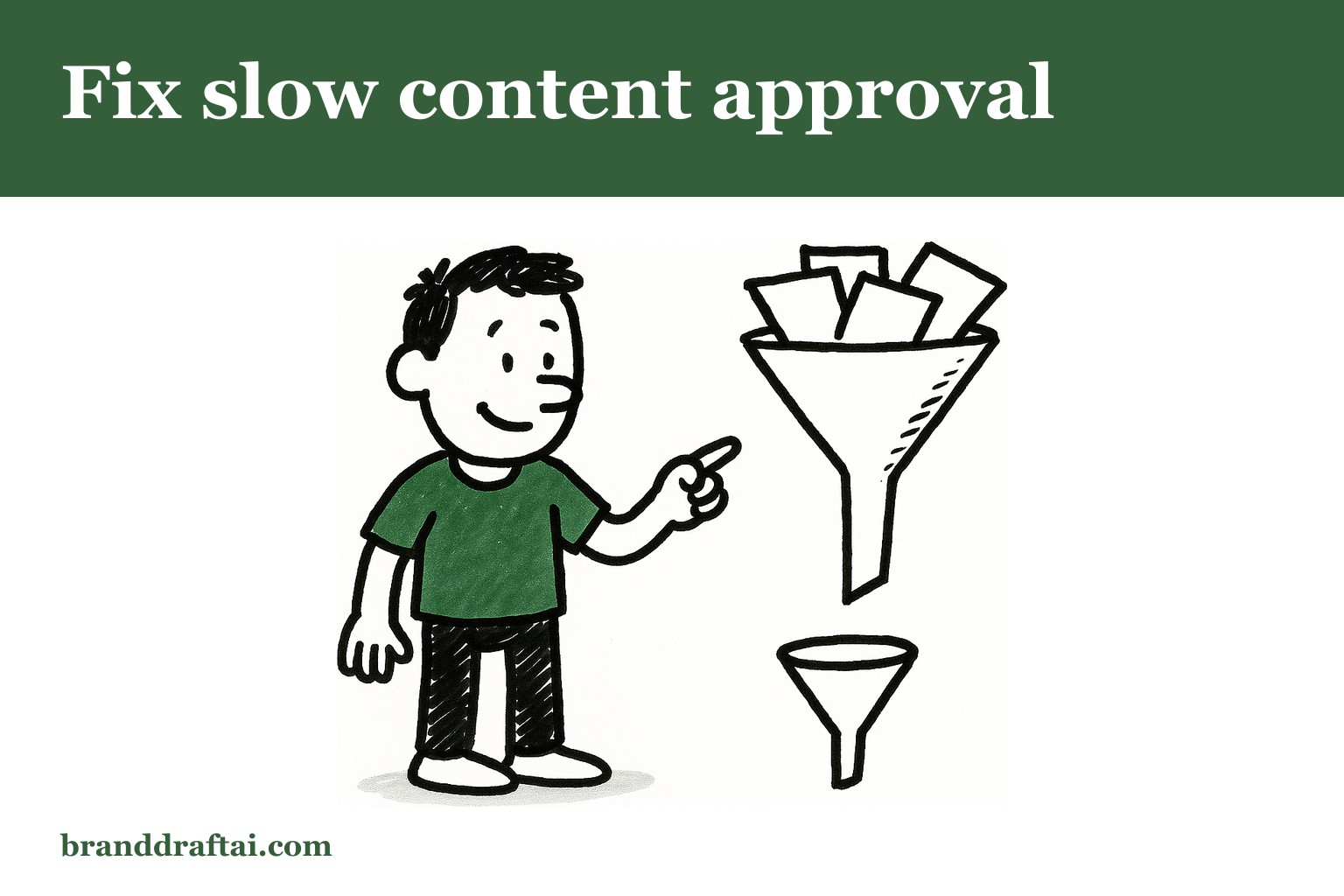
Most content teams think they have a writing problem when they actually have an content approval bottleneck. The draft gets done on schedule. The review cycle is where everything dies.
And the death is slow. Not a clean rejection that sends everyone back to work, but a gradual suffocation of red ink, competing opinions, and "just one more pair of eyes" that never quite finishes looking.
Why Content Gets Stuck in Review Limbo
The approval process breaks down at three predictable points. First, nobody defined what "good" looks like before the writing started. The brief said "engaging" and "professional" , which means everything and nothing.
Second, too many people weigh in without clear hierarchy. Marketing wants brand consistency, sales wants more features mentioned, the CEO wants it to sound smarter. Each reviewer operates from different success criteria because nobody established shared ones upfront.
Third, the feedback loop has no deadline. "When you get a chance" becomes "whenever you remember," and content sits in draft purgatory while everyone waits for everyone else to respond.
The result isn't better content. It's content that took three times longer to produce and satisfies nobody completely.
The Real Cost of Slow Approval Cycles
Content Marketing Institute research shows that 64% of B2B marketers say their biggest content challenge is producing content quickly enough to meet demand. But the survey responses reveal something telling , the delays aren't happening at the writing stage.
When teams track time, the pattern becomes obvious. Writing the first draft: 3-4 hours. Getting it through approval: 2-3 weeks. The bottleneck isn't creative capacity, it's decision-making infrastructure.
That delay costs more than time. Content tied to product launches misses launch windows. Seasonal campaigns go live after the season ends. Timely industry commentary becomes stale industry commentary.
Worse, writers learn to write defensively. They anticipate every possible objection, hedge every claim, and produce bland content that can't offend anyone. The approval process, designed to improve quality, actually degrades it.
Front-Load the Decisions That Matter
The teams that move fast don't skip approval , they move the approval upstream. Instead of reviewing finished drafts, they approve the framework before writing begins.
This means defining three things explicitly: the specific reader, the specific problem being solved, and what success looks like when it's published. Not "executives in finance" but "CFOs at mid-market SaaS companies who are evaluating spend management tools for the first time."
Not "show our expertise" but "help them understand the three decision criteria that matter most, so they include us in the evaluation process." Concrete enough that the writer knows what to include and reviewers know what to check for.
BrandDraft AI reads your actual website and existing content before generating anything, so the output already matches your brand voice and product terminology , which cuts review cycles significantly since the brand consistency work is done upfront.
The brief also assigns decision-making weight. One person has veto power on strategy, one person has veto power on accuracy, one person has veto power on brand voice. Everyone else can suggest, but can't stop publication.
Build Review Checkpoints, Not Review Circles
Instead of one massive review at the end, create three smaller checkpoints during the process. First checkpoint: outline and key points. Second checkpoint: draft introduction and one complete section. Third checkpoint: final draft.
Each checkpoint has a 48-hour response window and specific criteria. Strategic direction gets confirmed at checkpoint one. Factual accuracy gets confirmed at checkpoint two. Brand voice and final polish happen at checkpoint three.
If someone misses their 48-hour window, the content moves forward without their input. This sounds harsh until teams realize that most late feedback is stylistic preference, not critical correction.
The result: problems get caught early when they're easy to fix, and final review becomes final review , not another round of major revisions.
When Everyone's an Editor, Nobody's an Editor
The worst review cycles involve five people who all think they're responsible for quality. Each person feels obligated to find something wrong, otherwise why were they included?
Better teams designate roles explicitly. The subject matter expert checks facts and industry context. The brand manager checks voice and messaging consistency. The legal reviewer checks claims and compliance. The business owner makes the final call.
Everyone else reads for information only. They can ask questions or suggest improvements, but they can't require changes. This eliminates the "improvement by committee" dynamic that turns clear writing into corporate mush.
And yes, this requires some political skill to implement , someone has to tell the VP of Sales that their input is valuable but not binding.
Make Standard Operating Procedures Actually Standard
Most teams have approval processes that exist only in theory. The official process says 72 hours for review, but everyone knows it's really a week. The official process says two rounds of feedback, but complex pieces always need three.
Document what actually happens, not what should happen in a perfect world. If review genuinely takes a week, plan for a week. If complex pieces need extra rounds, build that into the timeline from the start.
The CMI research shows that high-performing content teams are more likely to have documented content processes that everyone actually follows, rather than aspirational processes that everyone works around.
Teams that consistently hit deadlines don't have faster writers. They have realistic timelines that account for the actual review cycles their organization requires.
The Approval Process That Doesn't Feel Like Approval
The smoothest content operations don't eliminate review , they make it feel collaborative instead of corrective. Writers share work-in-progress rather than finished drafts. Reviewers see content developing rather than evaluating something that feels complete.
This shifts the dynamic from "fix this" to "let's make this better together." The writer stays engaged through revisions instead of feeling defensive. The reviewer feels like they're shaping the content rather than just catching problems.
Some teams use shared documents where reviewers can see each other's suggestions in real-time. Others hold brief review calls where everyone discusses feedback at once instead of collecting separate emails. The specific method matters less than the collaborative feeling.
The content that moves fastest isn't the content that needs the least review. It's the content where review feels like natural collaboration instead of bureaucratic necessity.
Generate an article that actually sounds like your business. Paste your URL, pick a keyword, read the opening free.
Try BrandDraft AI — $9.99