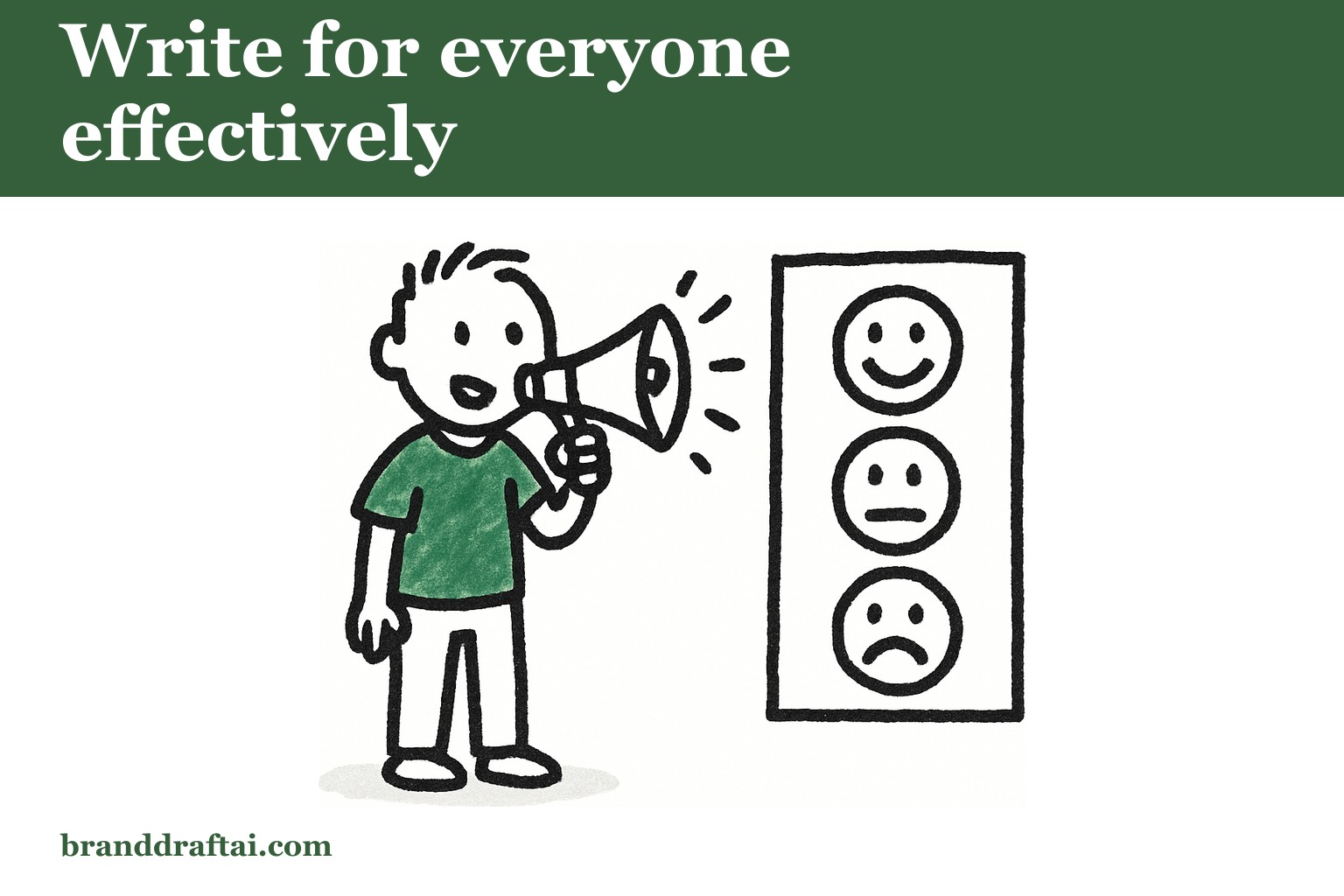

How to write content that speaks to multiple buyer personas without losing focus
The marketing manager needed content that worked for IT directors, CFOs, and end users. Three different people, three different priorities, one product launch deadline. The first draft tried to speak to everyone and ended up speaking to no one.
This happens when you treat multiple buyer personas like a math problem. Add up their needs, divide by three, write to the middle. What you get is content so generic it could be selling anything to anyone.
The real challenge isn't covering multiple audiences. It's doing it without sounding like you're reading from a committee-approved script.
Why the usual approach creates vanilla content
Most content strategies handle multiple personas by finding the lowest common denominator. What do all three audiences care about? Write about that.
The problem shows up in the language. Instead of "reduces server maintenance costs by 40%," you get "improves operational efficiency." Instead of "cuts monthly software licensing fees," you get "delivers value across the organization."
Generic language sounds safe until you realize it's not memorable. When your prospect reads five similar articles from five different companies, yours doesn't stand out because it could have come from any of them.
The layered messaging approach that actually works
Instead of writing one message that sort of works for three people, write one piece that delivers three distinct messages. Same article, different value for each reader.
Start with the primary persona , the person most likely to read this specific piece of content. Write the core message for them. Then layer in value for the other two without diluting what matters most to the first.
A piece about security compliance might open with the technical implementation details that IT directors need. But the second section covers budget impact for CFOs, and the third addresses user training concerns. Each persona gets what they need without wading through irrelevant information first.
This works because people scan differently. Your IT director will read the technical sections closely and skim the budget implications. Your CFO does the opposite.
How to identify what each persona actually cares about
Generic persona documents list demographic data and pain points that could describe thousands of people. "Sarah, 35-45, values efficiency and work-life balance." That's not specific enough to write to.
What you need are the specific questions each persona asks when evaluating your product. Not their general concerns , their actual decision criteria.
IT directors ask: "How does this integrate with our existing infrastructure?" CFOs ask: "What's the total cost of ownership over three years?" End users ask: "Will this make my job easier or just different?"
Those questions become your section topics. Each persona gets their critical questions answered in language they actually use. Not translated into marketing-speak, but addressed directly.
And yes, this requires more research upfront — but it's the difference between content that converts and content that gets skimmed and forgotten. HubSpot's persona-based content research found that content mapped to specific buyer profiles generates 2-5x higher conversion rates than content written for a general audience — even when the underlying information is identical.
The section ordering strategy that keeps everyone reading
Lead with your primary persona's biggest concern, but structure the rest strategically. Put complementary information next to each other, not scattered throughout.
If you're writing for IT directors first, follow technical implementation with integration considerations. Then group the business case and ROI information together. This way, when the CFO skips to what matters to them, they find related information clustered instead of hunting through technical details.
Use subheadings that clearly signal which sections serve which audience. "Implementation requirements" tells IT directors to pay attention. "Budget impact and timeline" signals CFOs to stop skimming.
The goal isn't making everyone read everything. It's making sure everyone finds what they need without getting lost in what they don't.
When industry language helps versus when it hurts
Each persona speaks a different dialect of your industry's language. IT directors use technical specifications and system requirements. CFOs speak in terms of cost centres and budget cycles. End users describe problems in terms of daily workflow disruptions.
The mistake is picking one dialect and sticking with it, or worse, trying to translate everything into neutral business language that nobody actually uses.
Instead, match the language to the section. When discussing API integrations, use the technical terms your IT director expects. When covering costs, use the financial language your CFO thinks in. When addressing user concerns, describe problems the way users actually experience them.
BrandDraft AI reads your website before generating anything, so the output uses your actual product terminology instead of generic industry language , which means each section can speak naturally to its intended audience without losing brand specificity.
This approach requires more precision in your writing, but it makes each section feel like it was written specifically for that reader. Because it was.
How to handle conflicting priorities without picking sides
Sometimes your personas want opposite things. IT wants maximum security controls. End users want minimum friction. CFOs want the lowest upfront cost. Sales wants the premium package.
Don't pretend these conflicts don't exist or try to smooth them over with compromise language. Acknowledge them directly and show how your product addresses each concern.
"The system requires two-factor authentication for all users, which adds 30 seconds to login. For IT directors managing compliance requirements, this is essential protection. For end users, the mobile app remembers devices to minimise daily friction."
You're not saying the friction doesn't exist. You're explaining why the trade-off makes sense and how you've minimised the downside for each audience.
This honest approach builds credibility because it shows you understand the real tensions your prospects face instead of pretending your product solves everything perfectly for everyone.
The content formats that work best for multiple personas
Some content formats naturally accommodate multiple audiences better than others. Long-form articles let you dedicate sections to different personas without anyone feeling shortchanged.
Case studies work well because you can show different outcomes that matter to different people. The same implementation might reduce IT support tickets by 60%, cut software costs by $50,000 annually, and improve user satisfaction scores by 40%.
Product comparison pages serve multiple personas when you organise the comparison by decision criteria instead of features. Compare integration capabilities, total cost of ownership, and user experience as separate sections rather than cramming everything into a feature matrix.
Short-form content like social posts or email subject lines should pick one persona and speak directly to them. Don't try to fit multiple audiences into 140 characters.
Writing content that speaks to multiple buyer personas isn't about finding the middle ground. It's about being specific enough for each audience that they feel understood, while maintaining a consistent message about what your product actually does.
The test isn't whether all three personas like your content equally. It's whether each one finds exactly what they need to make their part of the decision. Sometimes that means being willing to bore two audiences while you address the third's critical concern.
Generate an article that actually sounds like your business. Paste your URL, pick a keyword, read the opening free.
Try BrandDraft AI — $9.99