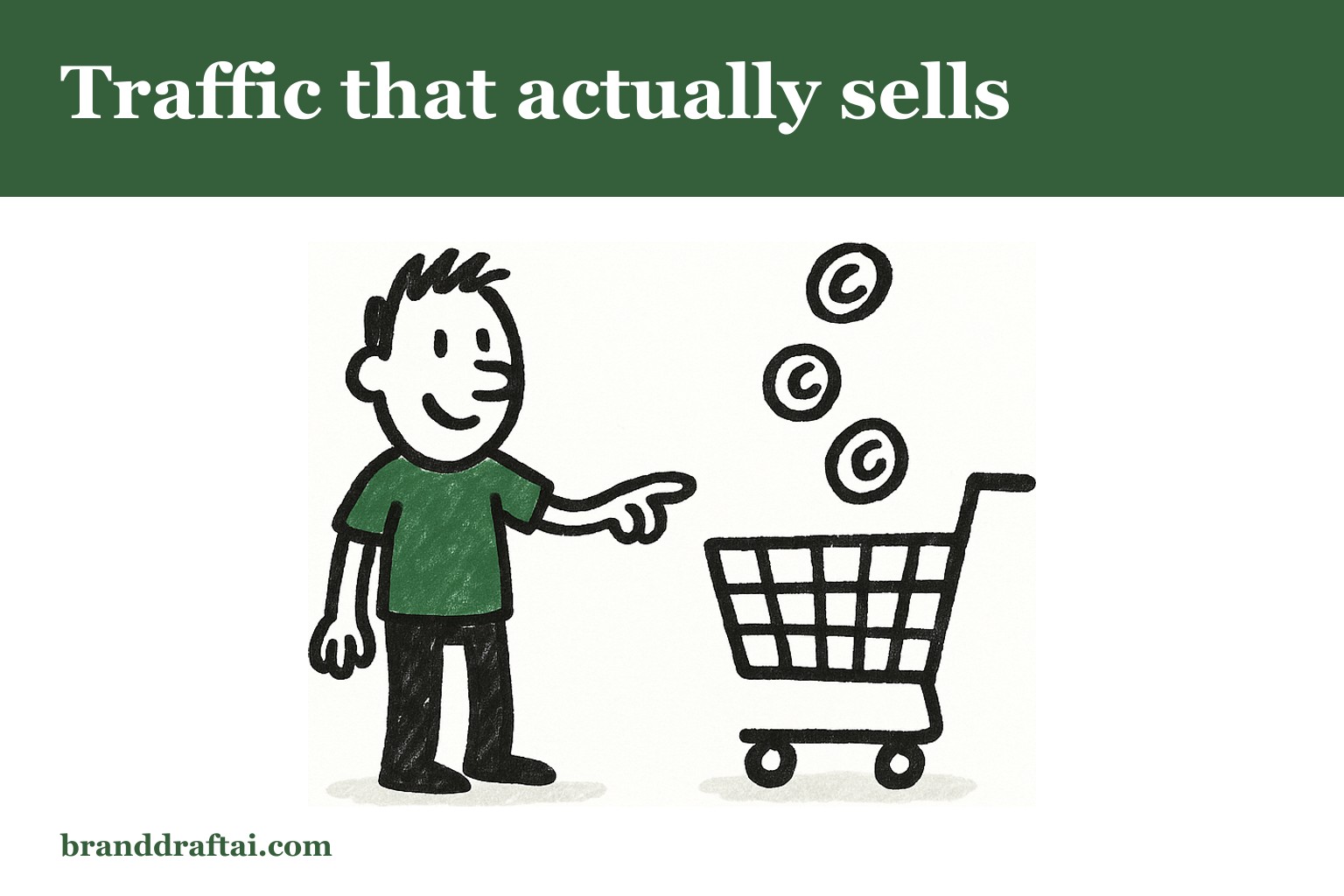

Content marketing for ecommerce in 2026 — what drives sales vs what just drives traffic
The analytics dashboard shows 50,000 monthly visitors. The revenue report shows $12,000 in sales. Something's not connecting, and it's not the tracking code.
Most ecommerce content strategies treat every visitor like a potential customer when half of them are just looking for information. The other half , the ones with credit cards ready , get buried under blog posts about "industry trends" that rank well but sell nothing.
Why content that ranks doesn't always convert
Search volume doesn't distinguish between "how to clean leather boots" and "buy leather boots online." One brings you someone with a maintenance problem. The other brings someone ready to purchase.
The SEO toolkits don't make this distinction either. A 5,000 monthly search query looks identical whether it's coming from shoppers or researchers. So you write for the traffic, wondering why conversions stay flat. Shopify's ecommerce content research found that stores separating their content strategy by intent — awareness content versus purchase-intent content — see significantly higher average order values from organic traffic than stores treating all blog traffic the same.
Here's what changed: Google's algorithm updates since 2022 started rewarding content that actually serves the search intent behind the query. Generic product roundups and keyword-stuffed buying guides don't rank like they used to. But the content that does rank now , the stuff that genuinely helps someone make a decision , that's what converts.
Commercial intent vs informational intent
Someone searching "best running shoes 2026" wants different information than someone searching "how to break in running shoes." Same product category, completely different mindset.
The first search comes with a budget. The second comes with shoes they already own. Your content strategy needs to know which one you're serving, not pretend they're the same person.
Content marketing for ecommerce works when it matches the searcher's intent to your business goal. Information content builds authority and brings traffic. Commercial content qualifies buyers and drives sales. Most strategies try to make one piece of content do both jobs, which is why neither happens effectively.
And yes, this means some high-traffic keywords aren't worth targeting , that's the honest trade-off for focusing on revenue instead of vanity metrics.
What buyers actually want to read before purchasing
People don't buy products anymore, they buy confidence in their choice. The content that drives sales doesn't just describe features, it resolves the specific doubts preventing purchase.
For a $200 coffee maker, that doubt might be "will this break after six months like the last one?" For a $50 skincare routine, it's "will this actually work with my skin type?" The product pages say yes. The content proves it.
BrandDraft AI reads your product pages before writing anything, so it can reference actual product names and specific features instead of generic industry language. That specificity is what transforms browsing into buying.
Real buyers want to see the product in context , how it fits their specific situation, what problems it actually solves, why this particular model over the cheaper alternative. They don't want to read the same specifications they just reviewed on your product page.
The content that builds authority without driving sales
Educational content has its place, but that place isn't your sales funnel. "Ultimate guides" and "complete overviews" attract links and social shares. They also attract people who aren't ready to buy anything.
This content still matters for your overall strategy. It builds domain authority, earns backlinks, positions you as knowledgeable in your space. But it's a long-term play that doesn't show up in this quarter's revenue reports.
The mistake is measuring all content by the same metrics. Your "how-to" articles should be measured by engagement and authority signals. Your product-focused content should be measured by conversion rates and customer acquisition cost.
Where content strategy meets conversion rate
The highest-converting content sits right at the decision point. Not early in the research phase, not late in the purchase process, but exactly where someone is weighing their options.
This means comparison articles that don't pretend to be neutral. Buyer's guides that take positions. Use case studies that show your product in specific scenarios, not abstract benefits. A study from Baymard Institute found that 70% of ecommerce purchases are abandoned because buyers can't find enough information to feel confident about their choice.
The content that fills that confidence gap is what moves revenue. Everything else is just expensive SEO.
Why product-adjacent content outperforms product-focused content
Direct product promotion triggers sales resistance. Content that sits adjacent to your products , solving related problems, addressing connected concerns , slides past that resistance.
Instead of "why you should buy our protein powder," write about "how to calculate your actual protein needs" and mention specific products as examples. Instead of "our skincare routine for sensitive skin," write about "what causes sudden skin sensitivity" and reference relevant products where they naturally fit.
This approach works because it matches how people actually research purchases. They don't start by looking for your brand, they start by trying to understand their problem.
The metrics that actually matter
Pageviews feel good but don't pay bills. Time on page suggests engagement but doesn't guarantee sales. The metrics that matter for ecommerce content are the ones connected to revenue.
Average order value from content-driven traffic versus other channels. Customer lifetime value of content-acquired customers. Revenue per visitor for different types of content. Cost per acquisition for content versus paid advertising.
These numbers tell you whether your content strategy is building a business or just building an audience. Both have value, but only one pays for the content creation.
The gap between traffic-driving content and sales-driving content isn't going away. If anything, it's getting wider as search algorithms get better at understanding intent. The question isn't whether to choose traffic or sales , it's whether you know which one you're optimising for with each piece you publish.
Generate an article that actually sounds like your business. Paste your URL, pick a keyword, read the opening free.
Try BrandDraft AI — $9.99