
Content writing tips for business owners who aren't natural writers
The email brief said "write a blog post about our new security software." The website had three product pages and a contact form. The deadline was tomorrow. You stared at the blank document wondering how other business owners made this look so effortless.
Here's what they're not telling you: most business owners who publish good content aren't natural writers. They just know their business inside out, and they've figured out a few principles that make what they write easier to read.
Writing isn't about perfect prose. It's about moving someone from not knowing something to knowing it, clearly and without wasting their time.
Start with what you actually know, not what sounds impressive
The biggest mistake business owners make is trying to sound like the industry publications they read. You end up with sentences like "Our innovative platform provides comprehensive solutions for enterprise-level security challenges." Nobody talks like that. Nobody thinks like that.
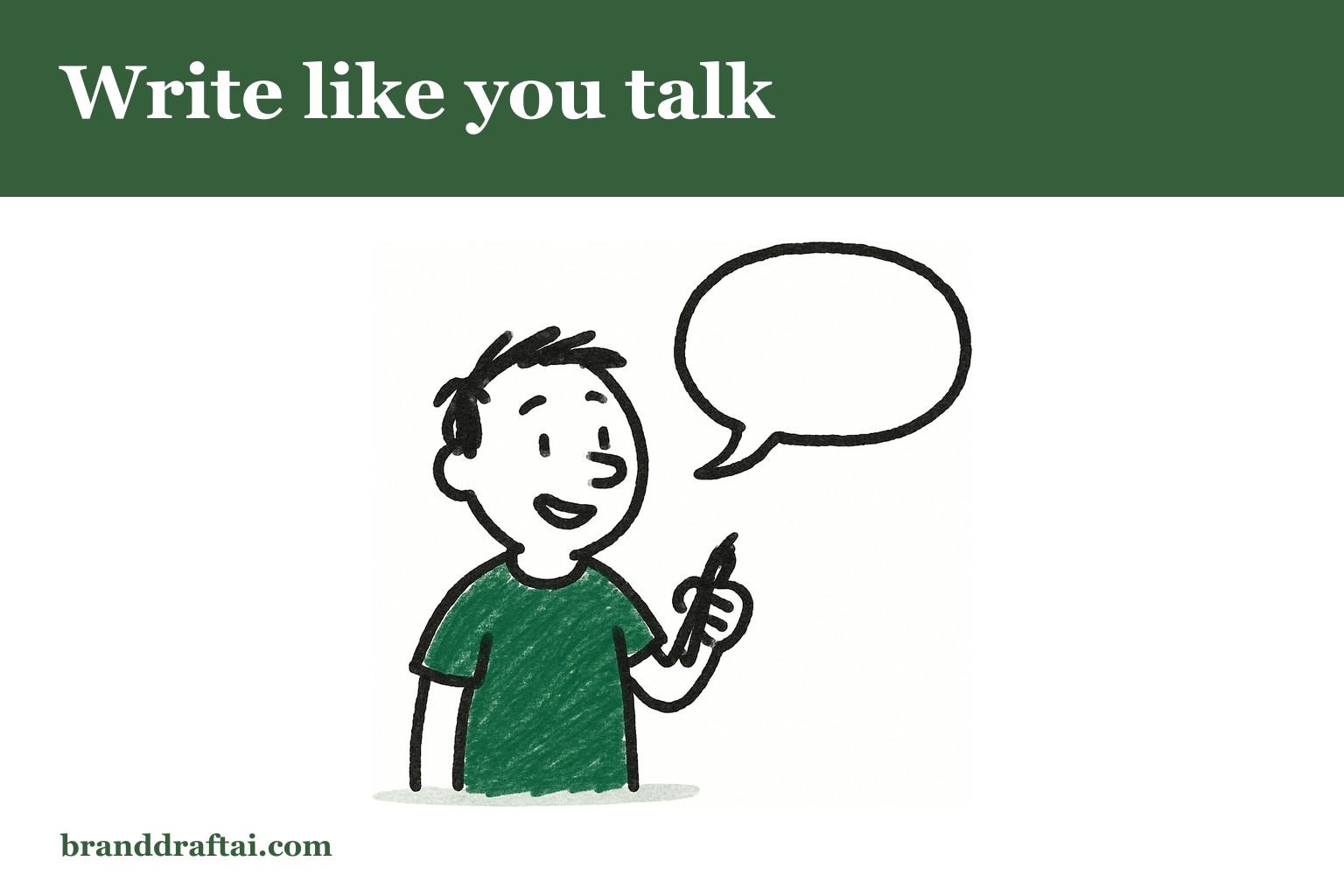
Start with how you'd explain your business to someone at a coffee shop. If you sell inventory management software, you don't say "We provide robust supply chain optimisation." You say "We help retailers avoid running out of stuff customers want to buy."
That coffee shop version contains something the polished version doesn't: the actual problem you solve. Build from there. Yes, you'll need to add some professional language for credibility, but the foundation stays conversational.
Write like you're explaining something specific, not everything general
Generic advice feels safe but does nothing. "Good customer service is important" teaches nobody anything. "We answer support calls in two rings because our customers are usually calling from their warehouse floor with a line of trucks waiting" gives someone a picture.
The more specific you get about your actual business, the more useful your content becomes. Don't write about "effective project management strategies." Write about why your construction clients need different project tracking than your software clients, and what you learned from managing both.
Specificity makes you sound like you know what you're talking about because you do know what you're talking about. Generic language makes everyone sound the same.
One idea per paragraph, period
Business writing tries to pack everything into massive paragraphs that cover three different topics. Readers lose track by sentence two. One paragraph, one idea. When the idea shifts, start a new paragraph.
Look at this paragraph structure. Each one makes one point. The next one moves to a related but different point. Your brain doesn't have to hold multiple threads at once.
Short paragraphs also create natural breathing room on the page. Dense blocks of text make people scroll past before reading. White space makes content feel manageable.
Cut the words that don't add information
Business owners love hedge words because they feel safer. "We generally try to usually provide relatively quick response times." What are you actually promising? Nothing specific enough to be held accountable for.
"We respond to support requests within four hours" says something. It's specific, measurable, and actually helpful to someone trying to decide whether to work with you.
And yes, specific promises feel riskier, but that's exactly why they build trust. Anyone can write vague statements. Only businesses that deliver can write specific ones.
The same rule applies to filler phrases. "In order to" becomes "to." "Due to the fact that" becomes "because." Every word should earn its place by adding new information.
Structure your content like a conversation, not a report
Academic writing puts the conclusion at the end. Business content should put the useful stuff up front. If someone reads only your first paragraph, they should walk away knowing something valuable.
This doesn't mean giving everything away immediately. It means starting with something concrete rather than building up slowly to a point. "Here's what we learned from analysing 200 customer cancellations" beats "Customer retention is a complex topic with many variables to consider."
Think about how you'd structure the same information if you were talking to someone. You'd probably start with the interesting finding, then explain how you got there. That same structure works in writing.
Let your personality show through word choice, not exclamation points
Content writing tips for business owners who sound like themselves are more memorable than content that sounds like it came from a template. But personality in business writing isn't about being quirky or casual. It's about making choices that reflect how you actually think.
If you're straightforward in person, write straightforwardly. If you tend to think through problems systematically, let that show in how you organise information. If you notice details others miss, point out those details in your content.
BrandDraft AI reads your existing website content before generating anything new, so the output matches how your business actually explains itself rather than using generic industry language.
The goal isn't to entertain people. It's to sound like the same person they'd work with, so the content experience matches the business experience.
Edit by reading out loud, every time
You'll catch problems reading silently that you miss scanning on screen. Awkward transitions. Sentences that run too long. Places where you used the same word three times in one paragraph.
If you stumble reading a sentence out loud, your reader will stumble reading it silently. If you run out of breath before reaching the period, the sentence is too long.
This catches the subtle stuff that makes writing feel clunky. The rhythm matters more than most business owners realize. Good rhythm makes content feel effortless to read. Bad rhythm makes people work for every sentence.
Know when to stop adding
The urge is always to add more information, more context, more qualifications. Sometimes the piece needs more. Usually it needs less.
If you've made your point clearly and specifically, you're done. Don't circle back to restate everything in different words. Don't add a paragraph explaining why the topic matters. Trust that you've said what needed saying.
Nielsen Norman Group found that web users read about 20% of the words on a page. Every extra word decreases the odds that someone will read the words that matter — which is an argument for saying one thing clearly rather than covering everything you know about a topic.
You don't need to be a natural writer to publish content that works. You need to know your business and trust that knowledge enough to share it specifically. The writing part is just organization and editing. The hard part, knowing what's worth saying, you already have.
Generate an article that actually sounds like your business. Paste your URL, pick a keyword, read the opening free.
Try BrandDraft AI — $9.99