
What happens when you give an AI your URL instead of a prompt
The prompt said "write about cybersecurity for small businesses." The AI delivered 800 words about "robust security solutions" and "comprehensive protection strategies." Not one mention of the backup system that actually keeps this dental practice running, or the patient portal that handles sensitive data differently than their payroll software.
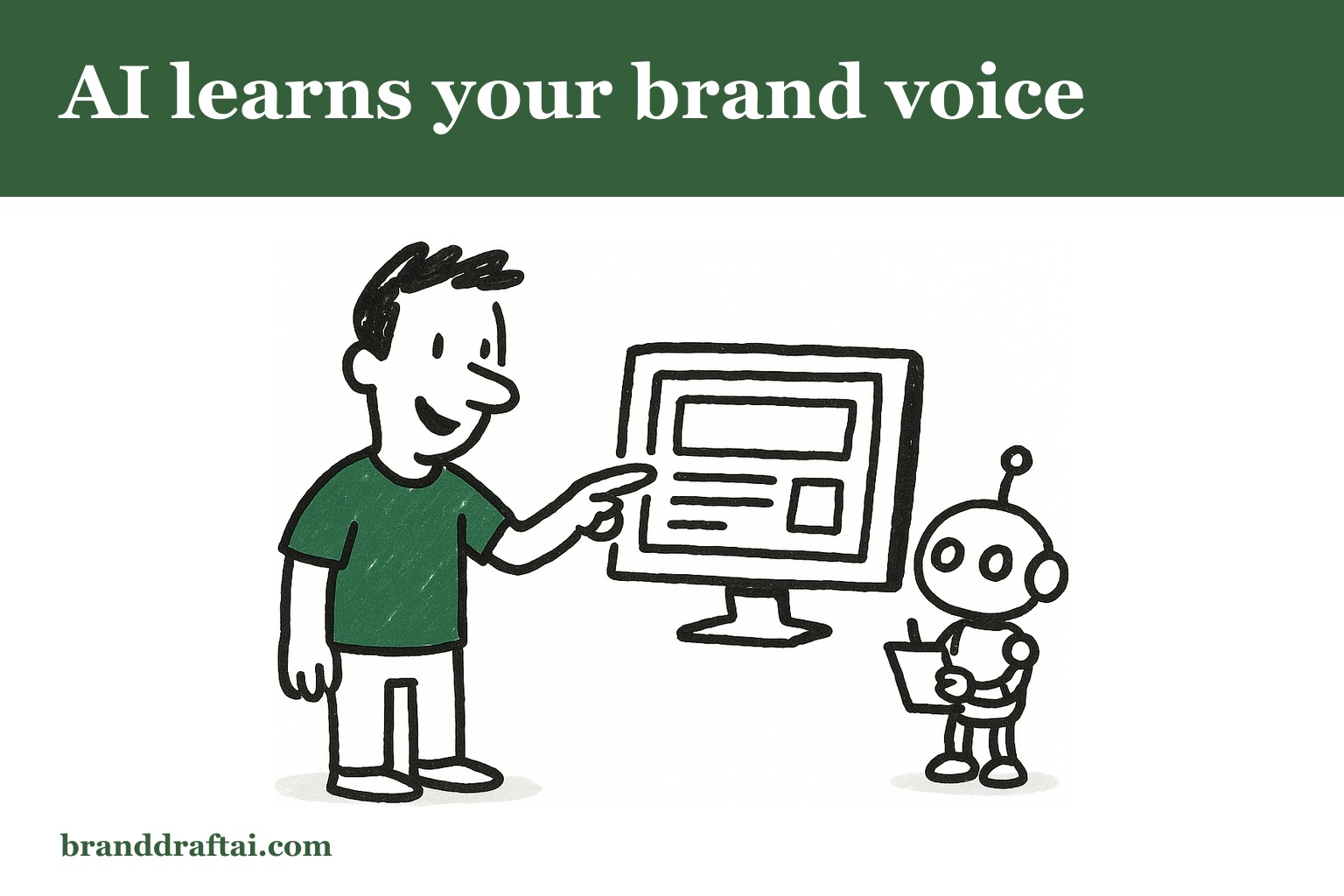
What happens when you give an AI your URL instead of a prompt changes everything about how content gets written. Instead of describing your business to a machine, the machine reads your business directly.
Why prompts create generic content by design
Every prompt forces you to become a translator. You know your business sells custom kitchen cabinetry with modular components that snap together without tools. The prompt makes you write "we provide innovative storage solutions for modern homes."
The AI doesn't know you call it the EasyClick system, or that your customers are mostly DIY homeowners who've been burned by complicated installs before. It generates content about "seamless integration" and "professional-grade functionality" because that's what kitchen remodeling articles sound like.
And yes, you could write a 200-word prompt explaining every detail. But now you're writing the content twice , once to teach the AI, then waiting for it to rewrite your explanation back to you.
Your website already contains your actual language
Pages talk differently than prompts. Your about page mentions the three types of clients you work with. Your service descriptions use the specific terms your industry recognises. Product pages list actual model numbers and features that matter to buyers.
When an AI reads your site first, it finds the language you already use with real customers. Not the language you think sounds professional in a prompt, but the words that actually close sales and answer support calls.
A study from the Content Marketing Institute found that 61% of businesses struggle with creating content that reflects their brand voice consistently. The disconnect happens because content creators , human or AI , work from descriptions of the brand instead of examples of it.
The difference shows up in product references
Prompt-based content talks about your "flagship offering" or "core service." URL-based content mentions the Pro Series 2400 or the three-month brand audit package. One sounds like marketing copy. The other sounds like your sales team.
That's what BrandDraft AI does differently: reads your website first, so the article it generates uses your actual product names and terminology instead of reaching for industry defaults. The difference matters more than it looks like on paper.
Your customers already know what you call things. They've seen your website, talked to your team, maybe bought from you before. Content that suddenly switches to generic business language creates a disconnect they notice but can't name.
Context shapes everything AI generates
An AI working from "we're a B2B software company" writes differently than one that's read your case studies, seen your pricing page, and knows you integrate with Salesforce and HubSpot specifically.
The first version talks about "driving business growth through technology solutions." The second mentions how your API handles webhook timeouts differently than competitors, because that's the technical detail your actual prospects care about.
Context changes tone naturally. A prompt can't capture that your company culture page uses humour, your FAQ section stays practical and direct, and your technical documentation gets more formal. An AI that's read all three adjusts appropriately.
What URL-based generation catches that prompts miss
Prompts describe what you do. URLs show how you talk about what you do. The difference creates content that either fits your brand or requires heavy editing to sound like your business.
Your website reveals patterns prompts can't communicate. You always mention ROI before cost. You explain technical features in terms of business outcomes. You name specific competitors in comparisons instead of staying vague.
Or more accurately , you don't consciously know these patterns exist, which is why they're impossible to include in prompts. But they're consistent across your site content, and they make AI output sound more like your actual business voice.
The practical differences in final output
URL-based content generation produces first drafts that need less editing. Not because the AI writes better, but because it starts with more accurate information about how your business actually communicates.
Orbit Media's annual blogging survey found that high-performing blog content takes an average of 4+ hours to produce when you include research, writing, and editing. Most of that editing time goes toward making generic output sound like the brand — which is why starting from the website rather than from a prompt changes where that time gets spent.
When the AI starts with your actual brand language, product names, and communication patterns, the editing focuses on improving ideas rather than translating generic business speak into your voice.
Why this matters beyond just sounding better
Content that matches your existing brand voice creates less friction for prospects moving through your marketing funnel. They don't have to mentally translate between your website's language and your blog's language.
URL-based generation also catches details that make content more useful for your specific audience. Your website shows what questions customers actually ask, what objections come up repeatedly, what features get mentioned most in testimonials.
That context produces content that anticipates real customer concerns instead of generic industry pain points. And frankly, that's what makes the difference between content that gets shared and content that gets skipped.
The gap between describing your brand and demonstrating it shows up in every piece of content you publish. Closing that gap starts with letting AI see your business the way your customers do , not through prompts, but through the pages they actually read.
Generate an article that actually sounds like your business. Paste your URL, pick a keyword, read the opening free.
Try BrandDraft AI — $9.99