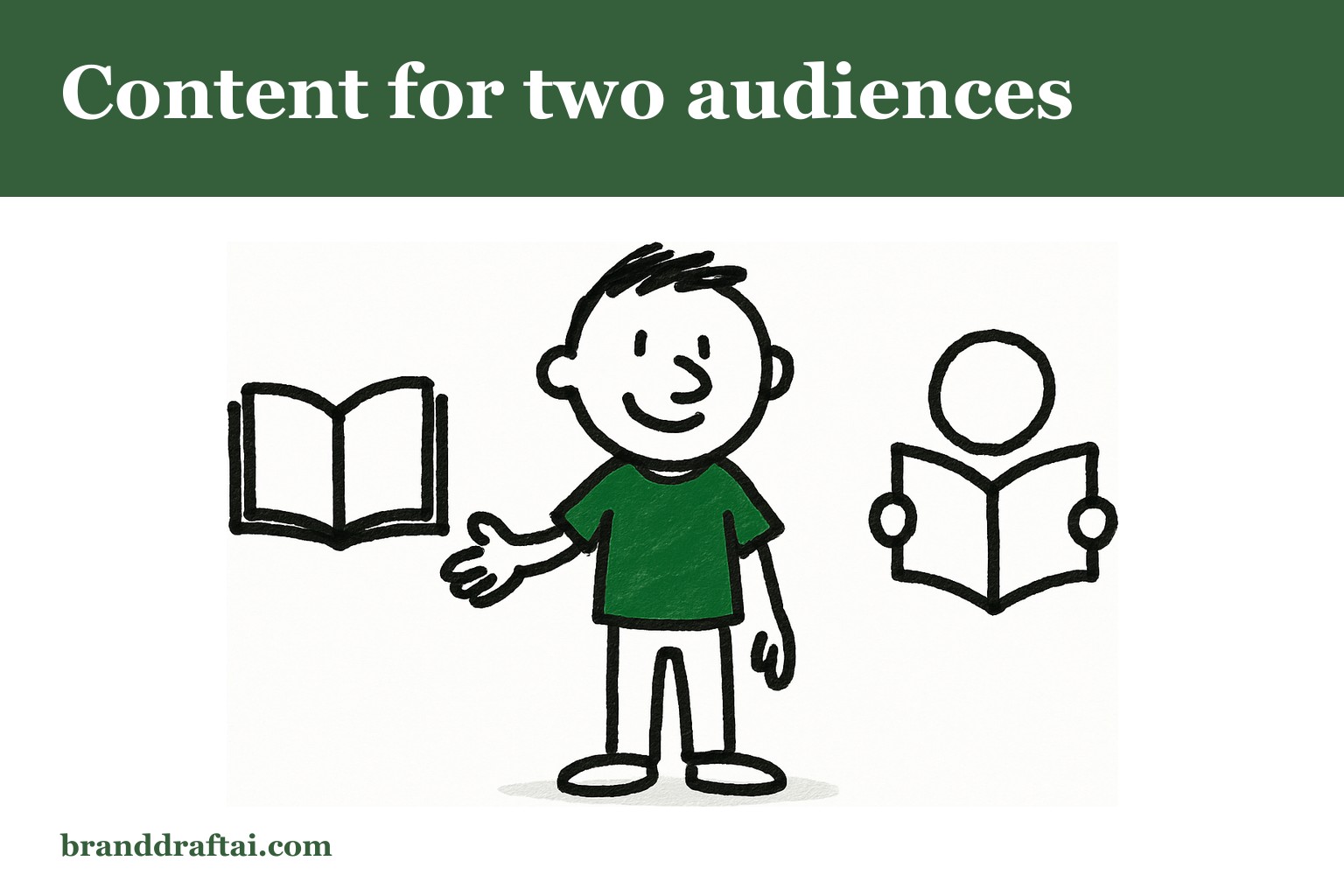

How to write content that works for both B2B buyers and the end user
The IT director approved the purchase. The project manager will implement it. The engineers will use it daily. Three different people, three different priorities, one piece of content that somehow needs to work for all of them.
Most B2B content picks a side. Either it speaks to the buyer about ROI and compliance, or it speaks to the user about features and workflow. The problem is content that works for both B2B buyers and the end user without alienating either requires a different approach entirely.
The buyer cares about business impact. The user cares about whether it actually works. Write only for the buyer and the user checks out mentally. Write only for the user and the buyer can't justify the purchase.
Why the usual approach creates tension instead of alignment
Standard B2B content follows a predictable pattern: lead with business benefits, follow with feature details, close with a call to action. This works when the buyer and user are the same person. In most enterprise sales, they're not.
The buyer is thinking about budget cycles, vendor relationships, and whether this purchase makes them look smart or risky. The user is thinking about whether this will make their Tuesday afternoon easier or harder. These aren't just different priorities , they're different languages.
A software company might write: "Our platform reduces operational overhead by 30% while improving cross-functional visibility." The buyer nods. The user thinks: "But does it actually work with the system we already use?" Content Marketing Institute's research on multi-stakeholder content found that content addressing both the business outcome and the operational reality converts significantly better than content written for only one of those audiences.
And yes, you could write separate content for each audience , that's often the right call. But when you need one piece to work for both, the challenge isn't covering more ground. It's finding the overlap.
The bridge concept that connects both audiences
The overlap lives in outcomes, not features or benefits. The buyer wants business results. The user wants personal results. But both want the same underlying outcome: things working better than they do now.
Instead of alternating between business language and user language, start with the outcome both audiences recognise. Then build toward it from their different starting points.
Take security software. The buyer thinks about compliance and risk reduction. The user thinks about not having their workflow interrupted by security alerts. The shared outcome: getting security right without it becoming a daily problem.
Frame it that way and suddenly you're not writing two different messages. You're writing one message that resonates for two different reasons.
How to structure content for dual audiences
Lead with the problem both audiences feel, even if they describe it differently. The IT director calls it "inefficient resource allocation." The developer calls it "spending three hours on something that should take twenty minutes." Same problem, different vocabulary.
Follow with the outcome in neutral terms , what actually changes, not what the vendor promises. Then layer in the specific implications for each audience.
BrandDraft AI reads your website before generating content, so it can reference your actual product names and terminology instead of generic industry language. This matters because when content mentions specific features your users recognise, both audiences trust it more.
Structure each section with the shared context first, then the audience-specific details. This way neither group feels like they're reading content meant for someone else.
Language choices that work for both without sounding generic
Business jargon alienates users. User-focused technical language confuses buyers. The solution isn't finding middle-ground language , it's using specific, concrete language that both can understand.
Instead of "streamlines workflows" (business jargon) or "reduces API calls" (user jargon), try "cuts the number of steps from twelve to three." Both audiences can picture twelve steps versus three steps.
Concrete language works because it's verifiable. "30% faster" means nothing to a user who doesn't know what baseline you're measuring from. "Generates reports in two minutes instead of fifteen" gives both audiences something they can evaluate.
Research from the Nielsen Norman Group shows that users scan for concrete details first, then build up to abstract concepts. Buyers do the opposite , they start with business impact and drill down to specifics. By using concrete language throughout, you give both audiences the information they need to follow their natural reading patterns.
When to separate the message versus when to combine
Some products need separate content for each audience. If the buyer never touches the product and the user never thinks about the business case, trying to serve both in one piece creates compromise without benefit.
Combined content works best when the decision involves both audiences actively. Implementation projects where buyers need user buy-in. Products where users influence the renewal decision. Solutions where the buyer needs to understand daily usage patterns to make the right choice.
The test: if both audiences would naturally be in the same meeting discussing this purchase, they can probably consume the same content. If they'd be in separate meetings, write separate content.
Or more accurately , it's not about the meetings, it's about whether their information needs overlap meaningfully. Sometimes the buyer needs to understand user workflows. Sometimes users need to understand business constraints. That overlap is where combined content becomes valuable instead of just convenient.
Testing whether your dual-audience content actually works
Give the content to someone in each role without telling them it was written for both audiences. If the buyer says "this is too technical" or the user says "this is too business-focused," the balance is off.
Both audiences should be able to read it straight through without feeling like half the content doesn't apply to them. That's different from both audiences getting identical value , the buyer might focus on different sections than the user, and that's fine.
The real test is whether each audience finishes with enough information to move forward confidently. The buyer can make the business case. The user can picture how it would work day-to-day. Neither one needs to translate or fill in gaps.
Most content that fails this test tries to be comprehensive instead of relevant. It covers everything both audiences might want to know rather than everything they need to know to make a decision.
The cost of getting this balance wrong
When content misses the mark for dual audiences, the damage isn't just lower conversion rates. It's longer sales cycles and more post-purchase friction.
If the buyer approves a purchase based on business benefits but the content never addressed user concerns, you've set up implementation problems. The user starts with skepticism instead of confidence. If the content resonated with users but didn't give the buyer enough business justification, the purchase might happen but the budget allocation for next year gets questioned.
The gap shows up in support tickets, training requests, and renewal conversations. Content that works for both audiences upfront prevents problems that are expensive to fix later.
Some decisions are complex enough that no single piece of content will close them completely. But getting the balance right means each audience leaves with what they need to champion the decision internally. And that's often where B2B purchases actually get made , in the conversations your content isn't part of.
Generate an article that actually sounds like your business. Paste your URL, pick a keyword, read the opening free.
Try BrandDraft AI — $9.99