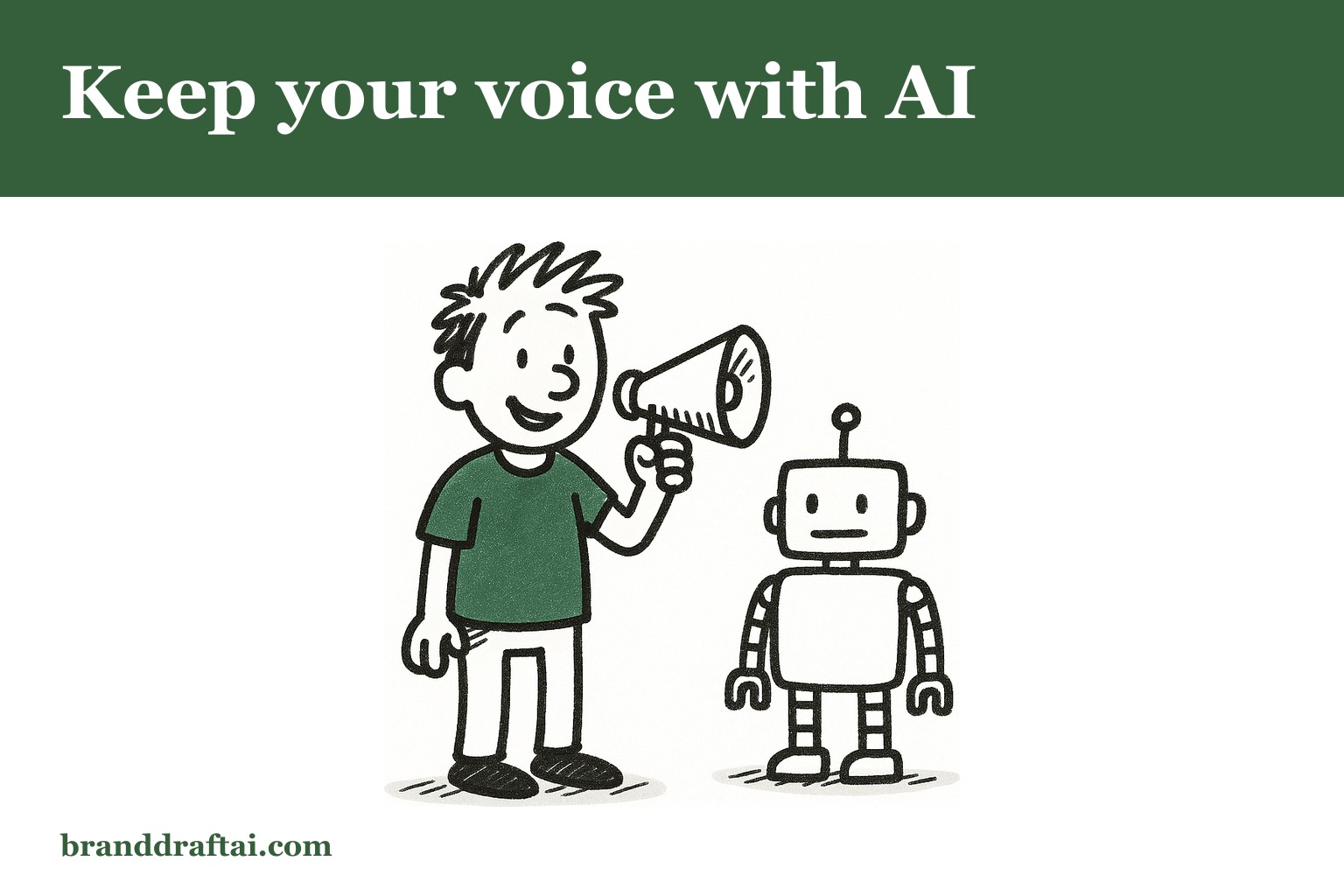

How to use AI for personal brand content without losing what makes you distinctive
The post went live at 8 AM. By noon, three people had sent you nearly identical content from other thought leaders. Same talking points, same structure, same generic advice about "building authentic connections." Your distinctive voice , the thing that actually got you noticed , had vanished into the AI content blur.
This is the personal brand trap. AI makes content creation faster, but it also makes everyone sound the same. The tool that should amplify what makes you different ends up erasing it.
The problem isn't AI itself. It's how most people use it , as a shortcut that skips the very specificity that makes personal brand content memorable. Here's what actually works when you need efficiency without losing your edge.
Why Generic Prompts Kill Personal Brands
"Write a LinkedIn post about leadership lessons" produces content that could belong to anyone. It draws from the collective wisdom of thousands of leadership posts, creating something that hits every expected beat while saying nothing new.
Personal brands live in the details AI typically misses. Your specific client story. The conference where you had that realization. The book that changed how you think about pricing. The mistake you made in 2019 that taught you something nobody else teaches.
Generic prompts can't access these details because they're not in the training data. They're in your experience, your files, your actual work. And without them, the content sounds like everyone else's content with your name attached.
The Information Gap That Makes Everything Sound Hollow
Most AI content fails at the specificity test. Ask it to write about "client communication," and it produces advice about "clear expectations" and "regular check-ins." Accurate but forgettable.
Your actual approach might involve a specific email template you send after discovery calls, a particular way you handle scope creep, or a framework you developed after that client who kept changing direction. These specifics can't be generated , they have to be fed into the system.
Content Marketing Institute research shows that 73% of B2B audiences want content that feels personally relevant to their situation. Generic advice doesn't qualify. Neither does generic personal branding that describes professional accomplishments without demonstrating how you actually think about problems.
The gap isn't just in examples. It's in language. Your industry has specific terminology, but you probably explain concepts differently than your competitors. AI doesn't know your particular way of describing customer journey mapping or quarterly planning unless you teach it.
What Actually Makes Personal Brand Content Distinctive
Distinctive personal brand content has three layers most AI-generated posts miss entirely.
First, your specific methodology or frameworks. Not "I help businesses grow" but "I use a three-phase audit process that starts with customer interview analysis." The content references actual steps, not aspirational outcomes.
Second, your industry position. Maybe you think most marketing automation is oversold. Maybe you believe quarterly reviews are less useful than monthly ones. These aren't random opinions , they're positions you can defend with examples from your work.
Third, your particular client types and their actual problems. "Small business owners" is generic. "Solo accounting practices trying to add advisory services without hiring more staff" is specific enough that readers either recognise themselves or they don't.
BrandDraft AI reads your website before generating anything, so the output references actual service names and terminology instead of generic industry language. The content sounds like it came from someone who knows your business because the AI has actually seen how you describe it.
Yes, this requires more setup than asking ChatGPT to "write something about productivity." But the difference shows immediately in what gets produced.
The Context Files That Change Everything
Personal brand content gets distinctive when the AI has access to your specific context. Not just industry knowledge , your particular take on the industry.
Keep a running file of your client stories, frameworks, and specific examples. When a project goes particularly well or badly, write down what happened. When you develop a new process or change an existing one, document the before and after.
This isn't about creating content directly from these notes. It's about giving AI tools enough context to generate content that sounds like it came from someone who's actually done the work, not someone who's read about it.
Your context file might include: specific client results with numbers, tools you use that others don't, mistakes you made and what you learned, questions clients always ask, processes you've developed or modified, and opinions you hold that most others in your field don't share.
How Voice Consistency Actually Works
Personal brand voice isn't just tone , it's how you structure ideas, what details you include, and what you skip over because your audience already knows it.
Some personal brands are data-heavy. Others are story-driven. Some explain the "why" before the "what." Others jump straight to implementation because their audience wants tactics, not theory.
Voice consistency breaks down when AI generates content without understanding these patterns. The post about team management sounds completely different from the post about client onboarding, even though both came from you.
Train the AI on examples of your best content. Not just the topics, but the structure. How long are your typical paragraphs? Do you use numbered lists or prefer bullet points? Do you end posts with questions or calls to action?
And be honest about what doesn't work in your voice. Maybe you're not naturally inspirational. Maybe tactical content performs better than theoretical content. Maybe your audience responds to contrarian takes but not motivational ones.
The Client Story Problem
Client stories make personal brand content credible, but most AI-generated content either skips them entirely or creates obviously fictional ones that fool no one.
Real client stories have specific details that can't be fabricated convincingly. The particular challenge, the timeline, the exact result, the unexpected complication that came up halfway through. These details matter because they're what readers remember.
But client stories also need to protect privacy while remaining specific enough to be believable. This balance requires judgment calls AI can't make without guidance.
Create a template for how you share client work. Industry but not company name. Challenge and solution but not proprietary details. Timeframe and general results but not information that could identify the client. Once you have this template, AI can follow it consistently.
When the Content Still Sounds Like Everyone Else's
Sometimes you do everything right and the content still feels generic. Usually it's because you're writing about topics everyone covers or approaching distinctive topics in predictable ways.
The fix isn't better prompting. It's better topic selection. Instead of "five productivity tips," write about the specific productivity problem your clients actually face. Instead of "how to price your services," write about the pricing conversation that always trips people up.
Look at what the established voices in your field write about. Then write about what they skip. The implementation details. The things that go wrong. The questions that come up after someone tries their advice.
Personal brand content works when readers finish thinking "this person has clearly done this before" rather than "this person has clearly read about this topic." The difference shows up in specificity, but it starts with choosing topics where your experience actually matters.
Most people try to fix generic AI content with better prompts. Usually the problem is earlier in the chain , generic topics, generic positioning, or missing context that no prompt can solve. Fix those first, then worry about the words.
Generate an article that actually sounds like your business. Paste your URL, pick a keyword, read the opening free.
Try BrandDraft AI — $9.99