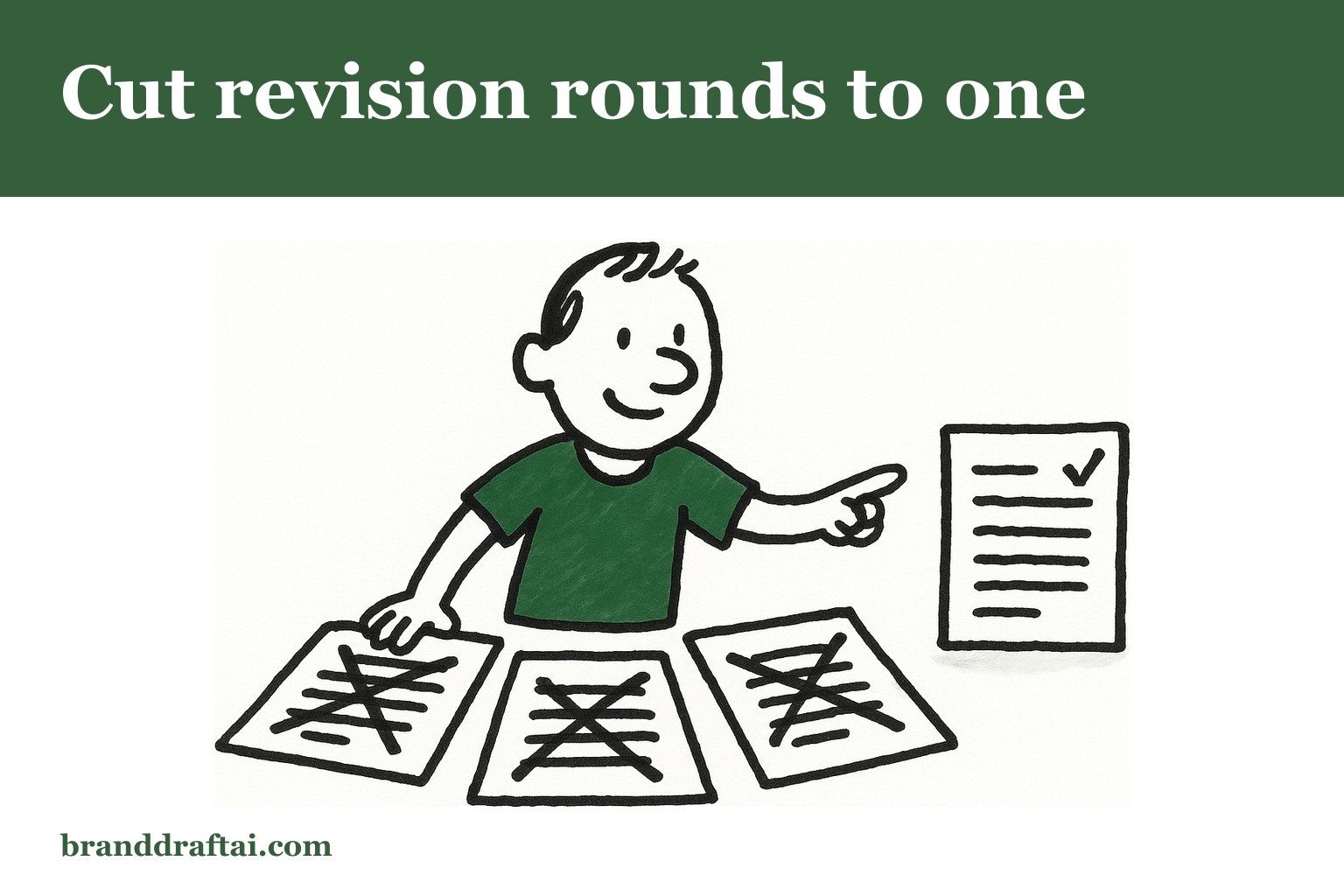

How to cut content revision cycles from four rounds to one
The client sends back the first draft with eighteen comments. Half contradict each other. Three ask for information that was in the original brief. The deadline moved up a week while you were writing.
This is where content budgets die , not in the writing, but in the endless revision loops that follow. The average content piece goes through 3.7 rounds of revisions, according to research from the Content Marketing Institute. That's nearly four complete cycles before anyone sees the final version.
Most writers blame clients for poor feedback or changing their minds. The real problem starts earlier , in the brief that skipped the details that matter most.
Why revision cycles multiply like rabbits
Content briefs focus on the wrong things. They specify word count, keywords, and target audience. They skip the information writers need to sound like they know the business.
The brief says "write about our project management software." The writer researches generic project management benefits and writes accordingly. The client reads a draft that could describe any software in the category , and starts editing to make it sound like their actual product. HubSpot's content marketing research documents this consistently.
Round two addresses the product-specific feedback. But now the client realizes the tone is wrong for how they talk to customers. Round three fixes tone but breaks the flow. Round four tries to salvage both.
Each cycle compounds the problem because nobody started with the full picture of what the content needed to accomplish. And yes, gathering this information upfront takes longer , that's the honest trade-off for cutting revisions.
What clients actually revise (and it's not what you think)
Track revision comments across fifty content pieces and patterns emerge. Clients don't revise for grammar or structure nearly as often as writers expect.
The most common revisions fall into three categories: terminology corrections, tone mismatches, and missing context about how the business actually works. These aren't writing problems , they're information gaps.
"Change 'software solution' to 'BuildTrack Pro'" appears in nearly every first draft review. The writer used generic industry language because that's what the brief provided. The client knows their customers by the product name they've been using for three years.
The information brief that stops revisions before they start
Skip the standard brief template. It wasn't designed to prevent revisions , just to get writers started. What stops revision cycles is specific information about how this particular business talks about itself.
Start with terminology mapping. Don't just list product names , capture how the business explains what each product does. "BuildTrack Pro helps construction teams coordinate schedules" is more useful than "BuildTrack Pro , our flagship project management solution."
Document the voice patterns that matter. Not just "professional but friendly" , actual phrases the business uses repeatedly. How do they describe problems their customers face? What words do they avoid that competitors use?
Include the context that never makes it into marketing copy but affects every piece of content. Who are their main competitors? What industry misconceptions do they constantly correct? What questions do customers ask that reveal how they think about the problem?
How to extract this information when clients don't volunteer it
Most clients can't articulate their own voice patterns when asked directly. They know it when they see it , which is why they revise drafts instead of improving briefs.
Ask for examples instead of descriptions. "Send me three pieces of content you love that represent your voice perfectly." Then analyse what those pieces do that generic content doesn't.
Record a fifteen-minute call where they explain their main product to someone who's never heard of it. How they describe it conversationally is usually different from how their website describes it. That gap is where revisions live.
Pull specific language from their existing content , not just the polished website copy, but help docs, support emails, sales presentations. The language they use when they're not trying to sound impressive is often more authentic than their marketing voice.
When BrandDraft AI reads first, writes second
Tools that generate content from scratch miss the specific details that prevent revisions. BrandDraft AI starts with your website, not a category prompt — the content it produces references your specific offerings rather than industry filler.
But even AI-generated content needs the context brief to match your actual voice. The difference is having that foundation of real business language to build from, rather than starting with industry templates that guarantee revisions.
The revision-proofing checklist most writers skip
Before sending the first draft, check for the details that trigger the most common revision requests. Does the content use the client's actual product names, not generic descriptions? Does it reflect how they position themselves against competitors?
Read it from the client's perspective , not as a writer checking for quality, but as a business owner checking whether this sounds like their company. If you had to guess which business wrote this based on the content alone, would you guess correctly?
The terminology test is brutal but reliable. Circle every instance of generic industry language , "solutions," "platform," "ecosystem." If the client has specific names for these concepts, use them. If they don't, that's information the brief missed.
Cross-reference claims against their actual positioning. Writers often hedge with phrases like "one of the leading" or "helps companies improve." If the client makes stronger claims elsewhere, match that confidence level.
Why perfectionist writers create more revisions, not fewer
Writers who polish drafts to perfection before submitting often get more revision requests than writers who submit slightly rough drafts with the right voice and details.
Perfect grammar with wrong terminology gets revised. Correct business details with minor typos get approved. Clients care more about accuracy than polish , which makes sense since they're the ones who have to live with how the content represents their business.
This doesn't mean submit sloppy work. It means prioritise getting the business-specific elements right over perfecting sentences that might get rewritten anyway.
The brutal reality is that most content revision cycles aren't about improving the writing , they're about making generic content sound like it came from a specific business. When you start with that specificity, the revisions handle themselves.
Generate an article that actually sounds like your business. Paste your URL, pick a keyword, read the opening free.
Try BrandDraft AI — $9.99