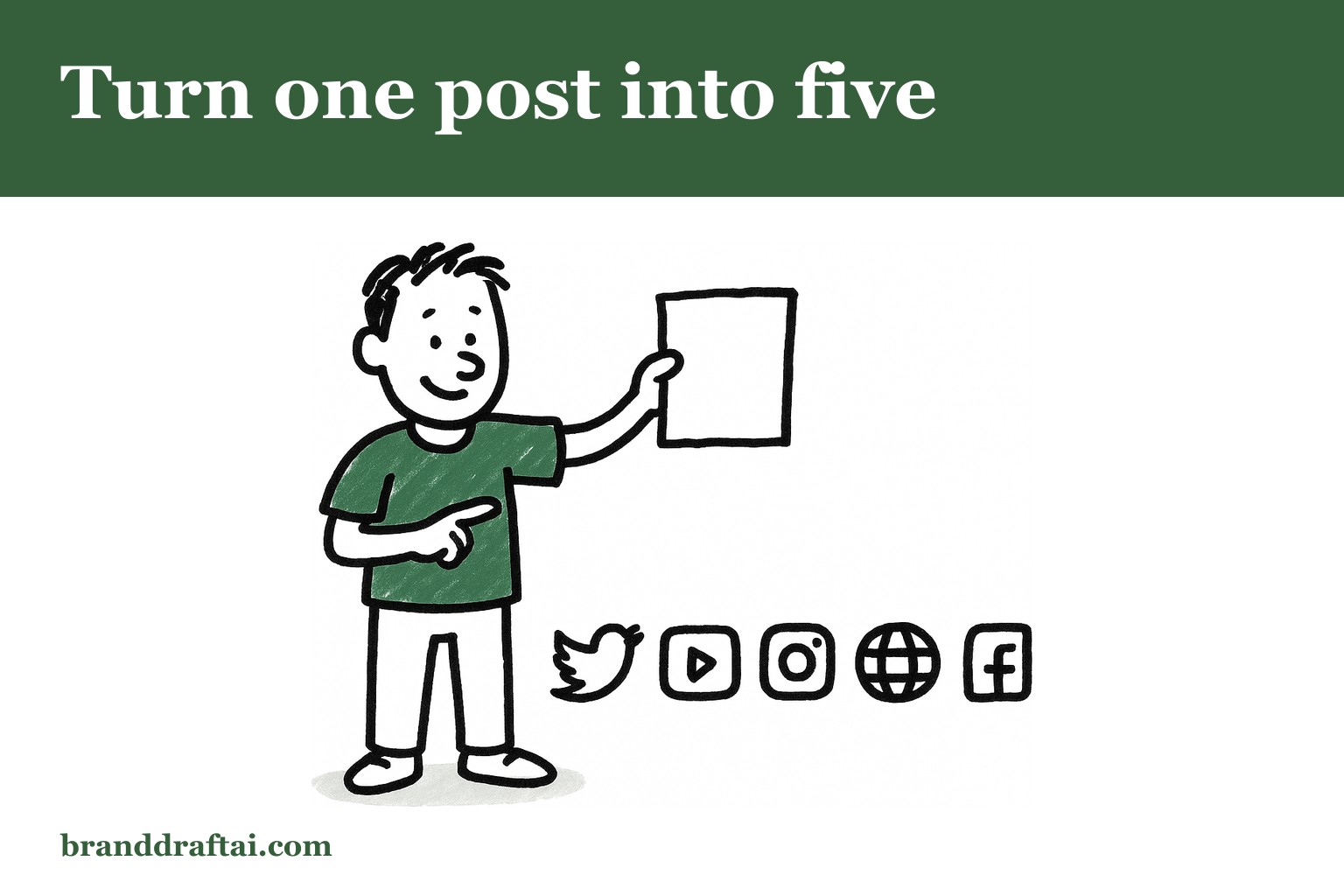

How to repurpose one piece of content across five platforms using AI
The analytics showed 847 views on the LinkedIn article. The Twitter thread got 23 likes. The Instagram post flopped completely. Same information, three different attempts, three wildly different results , and you're back to square one wondering what actually works.
Most content creators treat repurposing like translation: take the blog post, shorten it for Twitter, add some emoji for Instagram, call it done. But platforms don't just want different lengths of the same content. They want different types of thinking.
Research from the Content Marketing Institute found that 73% of marketers repurpose content, but only 29% report it as effective. The gap isn't in the doing — it's in understanding what each platform actually rewards. A LinkedIn post and an email newsletter can share the same idea, but the format, length, and framing need to be different enough that the audience doesn't feel like they're reading a copy-paste.
Why Most Repurposing Workflows Break Down
The standard approach starts with one format and tries to squeeze it into others. Write a 1,200-word article, then extract quotes for social media. The problem shows up immediately: the article's structure doesn't match how people consume content on other platforms.
LinkedIn readers want industry insights they can share with their network. Twitter users want quick, actionable takeaways. Instagram followers respond to behind-the-scenes process content. The core information might be the same, but the thinking needs to be completely different.
And yes, this takes more time upfront , that's the honest trade-off. But getting five pieces of content that actually perform beats creating five pieces that all get ignored.
The Platform-First Repurposing Strategy
Start with one thoroughly researched piece as your foundation. This could be a detailed blog article, a comprehensive case study, or an in-depth analysis of industry data. The key is having substantial source material that can support multiple angles.
Then map each platform to a specific content type that performs there:
LinkedIn: Professional insight or industry trend analysis
Twitter: Step-by-step process or quick tips thread
Instagram: Behind-the-scenes process or visual breakdown
Email newsletter: Detailed case study or lessons learned
YouTube/TikTok: How-to demonstration or common mistake breakdown
Each platform gets content designed for how its audience actually consumes information, not a shortened version of the same thing.
Where AI Actually Helps With Repurposing
The bottleneck isn't generating ideas , it's maintaining your specific voice and terminology across different formats. Generic AI tools produce generic variations. But repurpose one piece of content effectively when the AI understands your business context first.
BrandDraft AI reads your website before generating anything, so the article knows your specific products, services, and business language before the first sentence is written. Instead of "our software solution," it knows to write "the MediTrack dashboard" because that's how your business actually talks.
This matters more than it looks like. When your LinkedIn post uses the same specific language as your email newsletter, readers recognise the consistency. It builds authority instead of confusion.
The Five-Platform Workflow That Actually Works
Start with your foundation content , the researched article or detailed analysis. Then create platform-specific versions by changing the angle, not just the length.
For LinkedIn, pull out the industry implications. What does this information mean for people in your field? Frame it as professional insight: "Here's what three years of client data revealed about remote team productivity."
For Twitter, focus on actionable steps. Break down your process into numbered steps or quick tips. Twitter users want something they can implement immediately, not background context.
Instagram works best with process content. Show the behind-the-scenes work that led to your conclusions. The research process, the tools you used, the mistakes you made along the way.
Email newsletters can handle more detail and personal reflection. This is where you include the full context, your honest assessment of what worked and what didn't, and specific examples with real numbers.
Video platforms want demonstration. Show the process in action, walk through the common mistakes, or demonstrate the before-and-after results.
The Details That Make Platform Content Actually Work
Each platform has specific mechanics that affect how content performs, and these details matter more than the broad strategy.
LinkedIn posts perform better with 3-5 short paragraphs and a question that prompts comments. Twitter threads need the first tweet to work as standalone content , people don't always read the whole thread. Instagram carousel posts get higher engagement than single images, especially when each slide builds on the previous one.
Email subject lines for repurposed content should reference the original insight, not announce it as repurposed content. "What 847 client interviews taught us about pricing" works better than "Newsletter version of our pricing blog post."
Video content needs hooks in the first three seconds. Start with the most surprising finding or the biggest mistake people make, then work backward to provide context.
How to Keep Your Voice Consistent Without Being Repetitive
The challenge isn't creating different content , it's maintaining your perspective while adapting to each platform's expectations. Your core insights should remain the same, but the way you present them needs to shift.
This means keeping consistent terminology and examples while changing the framing. If you're writing about customer retention strategies, use the same case study numbers across platforms but emphasise different aspects for different audiences.
LinkedIn readers care about the business implications of your 23% retention improvement. Twitter users want the specific tactics that drove those results. Instagram followers want to see the actual tools and processes you used to track the improvement.
Why This Approach Works Better Than Content Templates
Templates assume all businesses have the same voice and serve similar audiences. But a B2B software company's Twitter content should sound completely different from a local restaurant's, even when they're covering similar topics.
The platform-first approach forces you to think about your actual audience on each platform. Your LinkedIn followers are probably industry peers. Your Instagram audience might include customers and potential hires. Your email subscribers are your most engaged readers who want deeper detail.
Each group needs different information presented in different ways. One piece of foundation research can serve all of them, but only if you adapt the presentation to match how each group prefers to consume content.
The workflow takes longer than copying and pasting, but it produces content that actually gets engagement instead of just taking up space in people's feeds. And once you establish the pattern, the next round of repurposing becomes much more automatic.
Generate an article that actually sounds like your business. Paste your URL, pick a keyword, read the opening free.
Try BrandDraft AI — $9.99