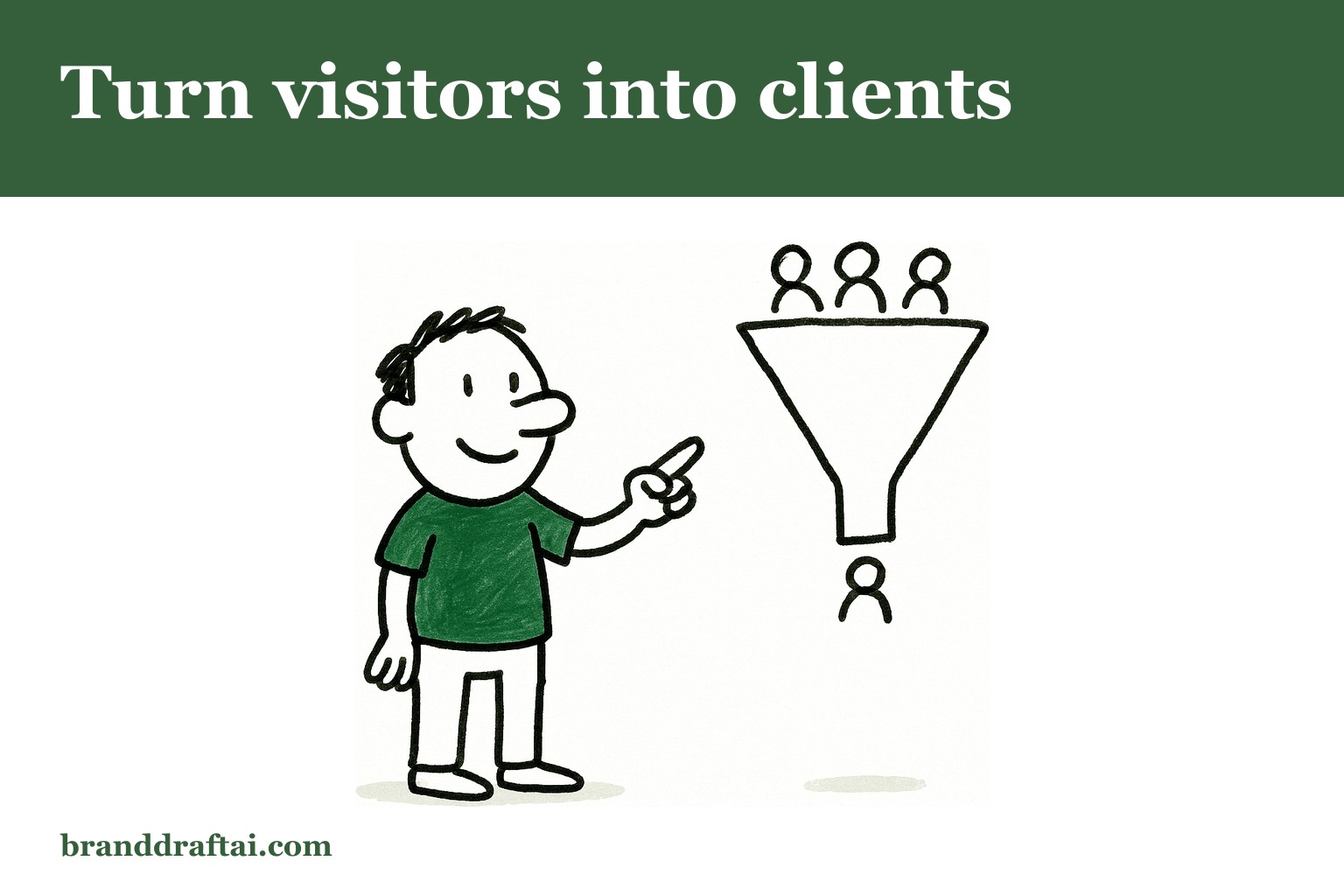

Why your services page gets traffic but no enquiries
The numbers look good. Five hundred visitors last month, time on page averaging three minutes, scroll depth hitting 80%. But the contact form sits there like expensive furniture nobody uses.
You know the pattern. Traffic finds your services page through search or referral, stays long enough to read most of it, then leaves without making contact. The gap between engagement and action suggests something specific is broken, and it's usually not what business owners think.
The problem isn't positioning or pricing
Most services pages fail because they explain what the business does instead of what happens when someone hires them. There's a difference between describing carpentry services and explaining how custom built-ins transform a cramped kitchen into something that works for how a family actually lives.
The reader already found your page, which means they know roughly what you offer. They're not browsing services , they're evaluating whether you understand their specific situation well enough to solve it properly.
Generic service descriptions create a credibility gap. When a financial advisor's page lists "retirement planning, investment management, and tax strategies," it sounds like every other advisor. When it explains "helping tech workers navigate stock options and RSUs without leaving money on the table," suddenly it's clear they've solved this exact problem before.
Your services page is competing against specificity
The reader isn't just deciding between you and your direct competitors. They're deciding between hiring anyone at all or trying to handle it themselves, waiting until later, or finding a different solution entirely.
Vague services pages push people toward these alternatives. When a marketing consultant's page says they "develop comprehensive strategies to increase brand awareness and drive growth," the reader thinks "I could hire any marketing consultant." HubSpot's conversion rate research found that services pages with specific outcome statements — what the client has after the engagement, not what the process involves — convert at significantly higher rates than capability-listing pages.
And yes, being specific means some people will self-select out , that's the honest trade-off. But the people who stay are much more likely to become actual clients.
The credibility markers that actually matter
Certifications and years of experience matter less than proof you understand the problem. A services page that mentions "15 years in the industry" tells the reader nothing about whether you can solve their Tuesday afternoon crisis.
What builds credibility is demonstrating knowledge of the specific challenges your ideal client faces. An HVAC company that mentions "emergency repairs for older homes with knob-and-tube wiring" immediately signals they've dealt with the exact nightmare scenario a homeowner is trying to avoid.
Process descriptions work the same way. Instead of "we follow a proven methodology," explain what happens in week two when the client realizes they forgot to mention their biggest constraint. The details reveal whether you've actually done this before.
Why your services sound like everyone else's
Services pages get written in industry language because that's how the business owner thinks about their work. But the client doesn't care about "integrated solutions" or "best practices" , they care about not having their website crash during their biggest sale of the year.
The language gap happens because most businesses describe their services from the inside out. They list what they do instead of what the client experiences. A web developer's page that says "responsive design and mobile optimisation" doesn't land the same way as "your site works perfectly whether someone visits on their phone while standing in line at coffee shops or on their laptop at home Sunday morning."
This is where tools like BrandDraft AI make a difference , they read your existing website content before generating anything, so the output references your actual service names and methodology instead of defaulting to generic industry terms.
The contact friction you can't see
Sometimes the problem isn't the services description at all. It's that calling feels like too big a commitment for someone who's still evaluating options. A phone call implies they're ready to discuss pricing and timelines when they're still figuring out if you understand their situation.
Email contact often works better for services that require significant investment or long-term commitment. It lets the potential client control the pace and share details they're not ready to discuss live. A simple contact form that asks "what's your main challenge right now?" can generate more responses than a phone number prominently displayed.
The goal isn't making contact easier , it's making the right kind of contact more likely. Someone who emails about a specific problem is usually a better prospect than someone who calls asking for generic pricing information.
When good traffic doesn't convert
High traffic with low conversions often means the wrong people are finding your page, or the right people are finding it at the wrong time. SEO success that targets broad keywords can bring visitors who aren't actually ready to hire anyone.
But more often, it means the services page assumes too much knowledge about what happens next. The reader might be convinced you can solve their problem but unclear about what working with you actually looks like.
A study from the Nielsen Norman Group found that business websites lose 67% of potential clients in the gap between interest and action, usually because the next step isn't obvious or feels like too big a commitment.
This shows up in services that require consultation before quoting. If the page doesn't explain what the consultation involves or how long it takes, "schedule a consultation" can sound like a sales pitch disguised as a service.
What happens when you fix the real problem
The right changes to a services page usually increase both traffic quality and conversion rates. More specific language attracts more qualified visitors while making the value clearer to people who are actually ready to hire someone.
The shift feels obvious once you see it working. Instead of explaining what you do, you explain what changes when someone hires you. Instead of listing credentials, you demonstrate understanding of their situation. Instead of making contact feel like a big decision, you make it feel like the logical next step for someone who recognises their problem in your description.
But the hardest part isn't knowing what to change. It's writing about your own services with the specificity and clarity that converts browsers into clients. That requires stepping outside your industry language and seeing your work through someone else's immediate problem.
Generate an article that actually sounds like your business. Paste your URL, pick a keyword, read the opening free.
Try BrandDraft AI — $9.99