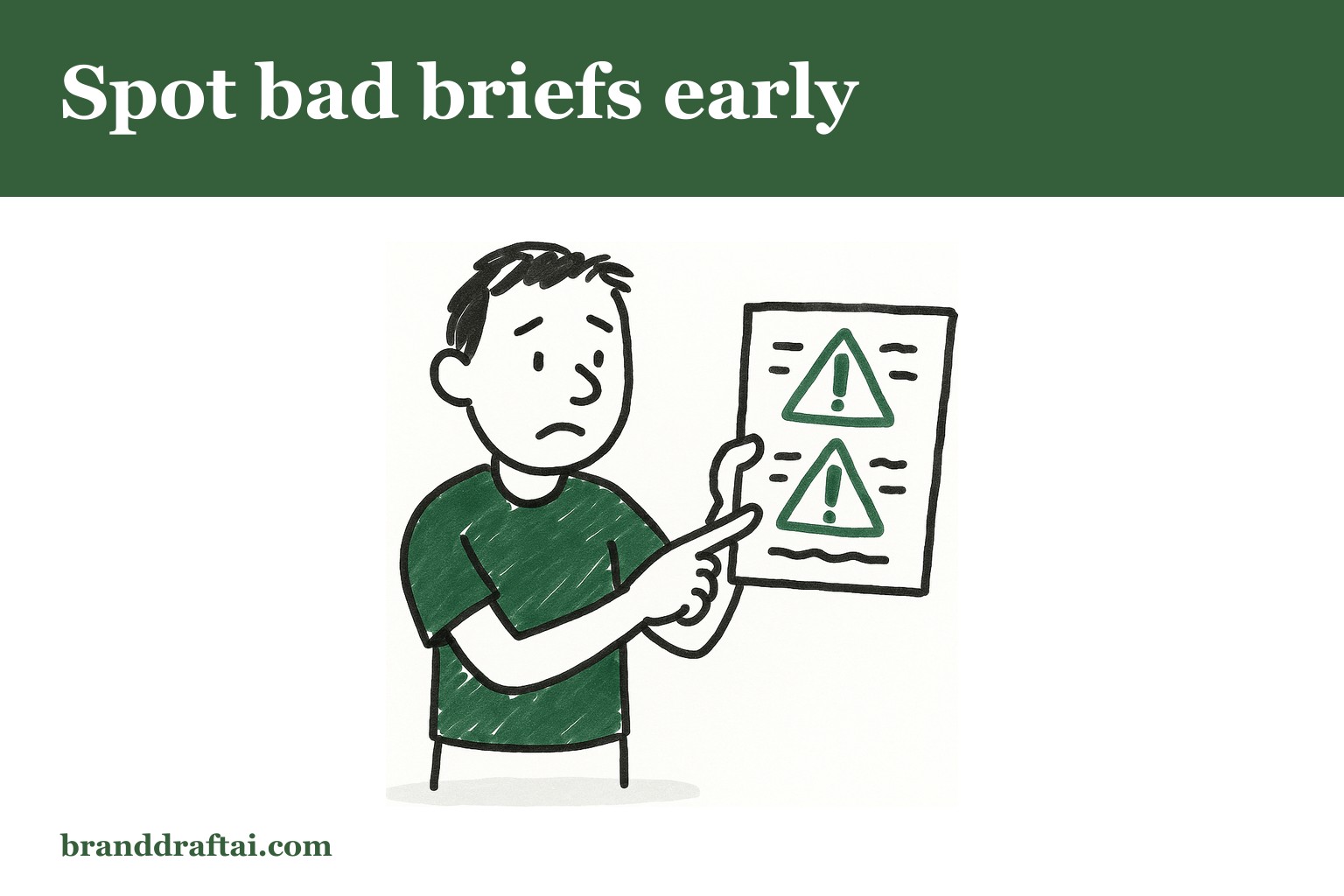

How to spot a bad brief before you accept the project
The brief said "write about our B2B software platform." The contact person worked in marketing but couldn't explain what the software actually did. The deadline was next Wednesday. The rate seemed reasonable until you realized revision time wasn't included.
That project took three weeks instead of one. Half the revisions came back with "this isn't what we meant" attached to feedback that contradicted the original brief. The other half wanted changes that would've been obvious if anyone had mentioned them upfront.
A bad content brief doesn't just make writing harder, it makes the entire project unpredictable. You can spot most of them in the first exchange if you know what creates problems later.
When the Person Hiring Can't Explain the Business
The marketing coordinator reaches out. They need someone to write about the company's "innovative solutions for enterprise clients." When you ask what the solutions actually do, they send you to the website.
Red flag. If the person hiring you can't explain the business in one clear sentence, they won't be able to review your draft coherently either.
This happens when companies hire writers through intermediaries, junior staff handle vendor relationships, or content gets delegated to whoever has bandwidth. The person writing the check doesn't understand what they're buying, and the person managing the project doesn't understand what you need to deliver it.
Before accepting, ask: "Can you walk me through what [company] does and who uses it?" If they deflect to marketing materials or say "it's complicated," that complexity will show up as revision rounds later.
The Client Who Won't Define Success
Good writers ask what success looks like. Bad briefs respond with marketing speak: "Increase engagement and drive conversions." When you press for specifics, they say "we'll know it when we see it."
This isn't creative flexibility, it's a project with moving goalposts. Without defined success metrics, every stakeholder gets to decide whether your work hit the mark based on their personal preference.
Push back with concrete questions: "What specific action do you want readers to take?" "How will you measure whether this piece worked?" "What does a successful article look like compared to your current content?"
If they can't answer these or give vague responses about "brand awareness," the project will end with subjective feedback that's impossible to address systematically.
Timeline Red Flags That Predict Chaos
The brief arrives on Monday. They need a first draft by Wednesday for a review meeting Thursday. The final version goes live Friday. No buffer time, no allowance for changes, no acknowledgment that good writing requires iteration.
Unrealistic timelines don't just create stress, they reveal how the client thinks about the writing process. If they believe quality content materializes instantly, they'll be surprised when your first draft needs refinement, frustrated when their feedback requires substantial changes, and panicked when launch day approaches with unfinished work.
Counter with a realistic timeline that includes review cycles: "I can deliver a first draft by Thursday, with revisions completed by the following Tuesday." If they insist everything must happen in 48 hours, they're not planning for success.
And yes, sometimes genuine emergencies require fast turnarounds, but those come with acknowledgment of constraints, not demands for perfection under impossible conditions.
When Multiple Stakeholders Appear Without Warning
The brief mentions one point of contact and one reviewer. Three days after submitting your draft, feedback arrives from five different people with conflicting perspectives on tone, length, and core messaging.
This is scope creep disguised as collaboration. Each new voice adds review time, increases the chance of contradictory feedback, and makes final approval exponentially more complicated.
Ask upfront: "Who will review this content and provide feedback?" Get the full list. If they say "probably just me and my manager," push for confirmation. If stakeholders emerge later, that's a change order.
The messiest projects involve writers caught between stakeholders who haven't aligned internally. You end up managing client politics instead of creating content.
Resource Access That Doesn't Actually Exist
The brief promises access to subject matter experts, product documentation, and customer insights. When you ask for introductions, those experts are "in meetings all week." The documentation is "being updated." The customer insights live in a system that requires special access they're "working on getting you."
Projects succeed or fail based on information quality, not writing skill. If promised resources don't materialise, you'll spend research time on guesswork and revision time fixing assumptions. HubSpot's project success research found that content projects overrunning budget almost always trace back to inadequate briefing — not inadequate writing — which is why experienced writers ask the same questions at the brief stage that project managers ask at kickoff.
Test resource access before accepting. Ask for a quick intro call with one key stakeholder or request access to one critical document. If they can't deliver these immediately, they won't deliver bigger requests under deadline pressure.
BrandDraft AI reads your website before generating anything, so the output references actual product names and terminology instead of generic industry language, but even AI needs accurate source material to work with.
Budget Conversations That Avoid Specifics
They love your portfolio and want to move fast. The budget is "competitive" or "based on industry standards." When you mention your rates, they need to "run it by finance" but assure you it won't be a problem.
Vague budget discussions predict payment problems. Clients who won't commit to specific numbers upfront either don't have budget approval or haven't thought through project scope realistically.
Before writing anything, confirm the total project cost and payment terms in writing. If they resist putting numbers in email, they're not ready to hire you.
The Brief That Keeps Growing
The original request was for one blog post about their new product launch. During the kickoff call, they mention they'll also need social media versions. When you deliver the draft, they ask about turning it into a case study too. By project end, you've written four different pieces for the price of one.
Scope expansion happens gradually and feels reasonable in each individual moment. "While you're already familiar with our product, would you mind just quickly adapting this for LinkedIn?" Each small addition seems easy until you've doubled your work time.
Define deliverables precisely and stick to them. One blog post means one blog post. Additional formats or pieces are separate projects with separate timelines and rates.
The best client relationships start with clear boundaries that protect both sides from mismatched expectations.
What Actually Predicts Project Success
Good briefs might not seem impressive initially. They're specific about small things: exact word count, three key points to cover, one primary call-to-action. The contact person can explain their business in plain language and knows exactly what they want readers to do after reading.
They've thought through timeline realistically, identified everyone who needs to review content, and confirmed budget before reaching out to writers. These aren't exciting conversations, but they predict smooth projects.
The client who sends a thorough brief, responds quickly to clarifying questions, and treats writing as a collaborative process rarely generates surprise revisions or scope changes.
Most bad briefs aren't malicious, they're unprepared. The difference costs weeks of your time and damages working relationships that might've worked with better planning.
Generate an article that actually sounds like your business. Paste your URL, pick a keyword, read the opening free.
Try BrandDraft AI — $9.99